If you're new to strength training, it's easy to feel overwhelmed. Where to begin? What exercises will work best? How often should you train? But once you're familiar with the basics of strength training, especially for the upper body (which is often overlooked when you're primarily focused on cardio), you'll find strength training to be one of the most enjoyable and empowering exercises you can do.
We'll go over some of the benefits that you'll begin to see when you strength train your upper body, and we'll help you find a routine and schedule that works best for you. We'll also go over proper warm-up exercises and the best strength training exercises, so you know exactly what you're getting into so you can safely incorporate them into your routine. To begin with, there are many more advantages to upper body exercises than just improved looks. The need to concentrate on gaining muscle mass increases as your body ages. It's crucial to keep loading your muscles since, after the age of 30, muscular mass falls by 3 to 8 percent per decade. This is a harsh but necessary truth that should inspire you to keep going. While upper body workouts can be done simply using your own body weight as the resistance, the added resistance of dumbbells or other weight is the key to getting results you can actually see.
No matter where you are in your fitness journey, creating a workout routine that includes consistent upper body exercises with weights and resistance will improve your flexibility, help prevent injury, and protect your shoulders, back, and core.
To begin with, there are many more advantages to upper body exercises than just improved looks. The need to concentrate on gaining muscle mass increases as your body ages. It's crucial to keep loading your muscles since, after the age of 30, muscular mass falls by 3 to 8 percent per decade. This is a harsh but necessary truth that should inspire you to keep going. While upper body workouts can be done simply using your own body weight as the resistance, the added resistance of dumbbells or other weight is the key to getting results you can actually see.
No matter where you are in your fitness journey, creating a workout routine that includes consistent upper body exercises with weights and resistance will improve your flexibility, help prevent injury, and protect your shoulders, back, and core.
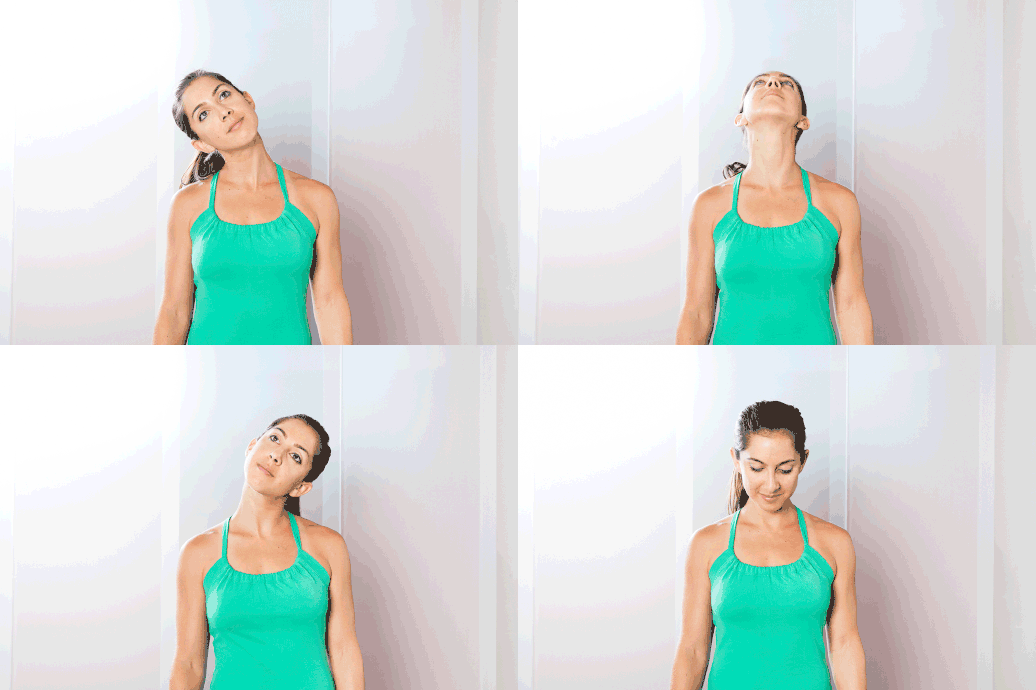 Neck stretch: You can relieve any tightness in your upper back, neck, or shoulders with this warm-up. Begin by standing up. Press your left palm toward the ground and lower your right ear to your right shoulder. Gently place your right hand over your left temple on your head. For approximately ten breaths, gently pull down, letting gravity do the majority of the work, to stretch the neck muscles. Continue on the left side.
Shoulder stretch: This will assist with easing strain in your shoulder muscles, increment your versatility, and lessen your gamble of shoulder injury. While standing, take one arm and pull it across your chest. Utilizing your other hand, take hold of the external lower arm of your crossed arm, and drive it into your body, trying to keep your elbow close to bear level. Hold for 30 seconds, then recurrent on your other arm.
Upper body rotation: Your upper body mobility and flexibility will improve as a result of this warm up. Sit cross-legged on the floor, rotate your shoulders to the left, and grab your left knee with your right hand. To deepen the stretch, put your left hand on the floor between your legs. Hold it for at least 30 seconds, and repeat on the right side.
Wrist flexing: This will improve your wrist mobility and help you hold your weights better. Place your hands in front of your body with your palms facing each other. Bend your wrist. Place your palms flat on the floor and place your fingers on the ceiling. Pull your fingers back with your other hand and hold for 30 seconds. Do this on both sides and repeat a couple of times. Feel a slight stretch in your wrists and forearm.
Jumping jacks: These will assist in raising your heart rate. Place your arms at your sides and your feet together as you stand. Stretching your legs wide, leap up and clap your hands together above your head. Go back to where you were when you started the following jump. Do this for a minimum of thirty seconds.
Now that you've warmed up, you're ready to get started. The below exercises are some of the most effective strength training exercises for building upper body strength.
Neck stretch: You can relieve any tightness in your upper back, neck, or shoulders with this warm-up. Begin by standing up. Press your left palm toward the ground and lower your right ear to your right shoulder. Gently place your right hand over your left temple on your head. For approximately ten breaths, gently pull down, letting gravity do the majority of the work, to stretch the neck muscles. Continue on the left side.
Shoulder stretch: This will assist with easing strain in your shoulder muscles, increment your versatility, and lessen your gamble of shoulder injury. While standing, take one arm and pull it across your chest. Utilizing your other hand, take hold of the external lower arm of your crossed arm, and drive it into your body, trying to keep your elbow close to bear level. Hold for 30 seconds, then recurrent on your other arm.
Upper body rotation: Your upper body mobility and flexibility will improve as a result of this warm up. Sit cross-legged on the floor, rotate your shoulders to the left, and grab your left knee with your right hand. To deepen the stretch, put your left hand on the floor between your legs. Hold it for at least 30 seconds, and repeat on the right side.
Wrist flexing: This will improve your wrist mobility and help you hold your weights better. Place your hands in front of your body with your palms facing each other. Bend your wrist. Place your palms flat on the floor and place your fingers on the ceiling. Pull your fingers back with your other hand and hold for 30 seconds. Do this on both sides and repeat a couple of times. Feel a slight stretch in your wrists and forearm.
Jumping jacks: These will assist in raising your heart rate. Place your arms at your sides and your feet together as you stand. Stretching your legs wide, leap up and clap your hands together above your head. Go back to where you were when you started the following jump. Do this for a minimum of thirty seconds.
Now that you've warmed up, you're ready to get started. The below exercises are some of the most effective strength training exercises for building upper body strength.
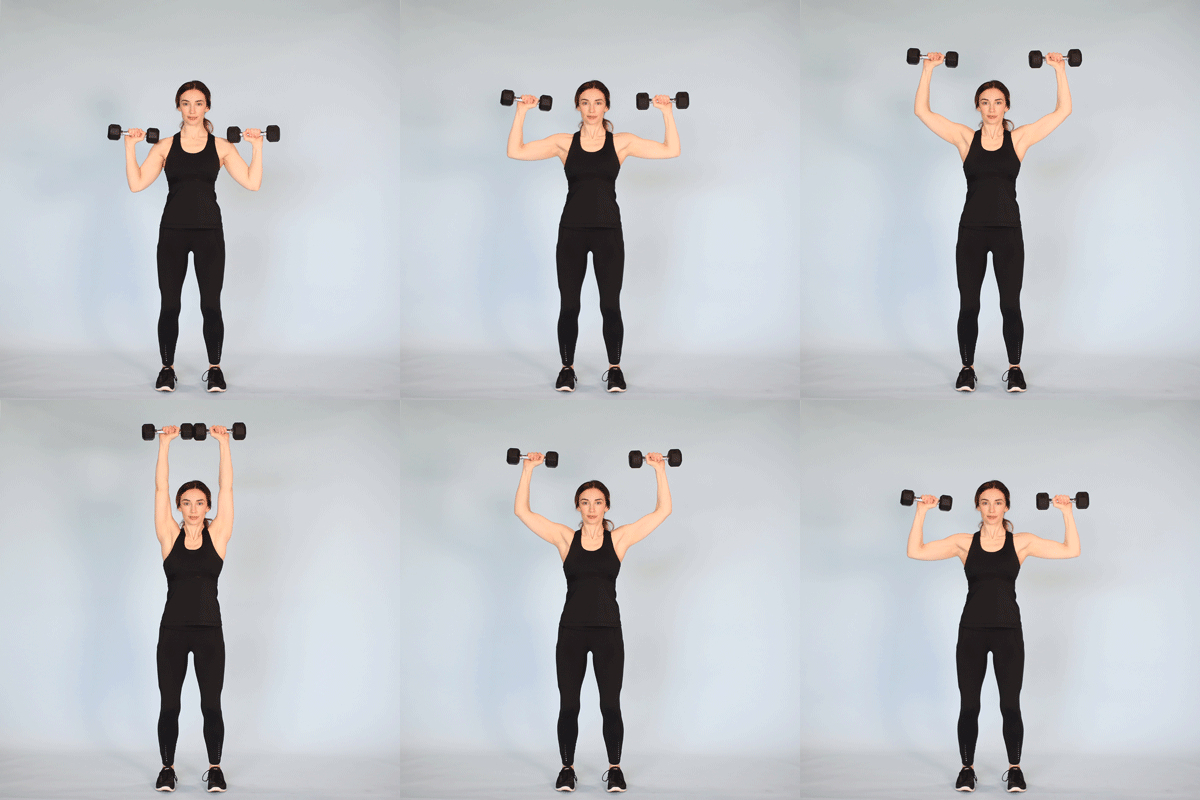
Muscles worked: Triceps, forearms, chest
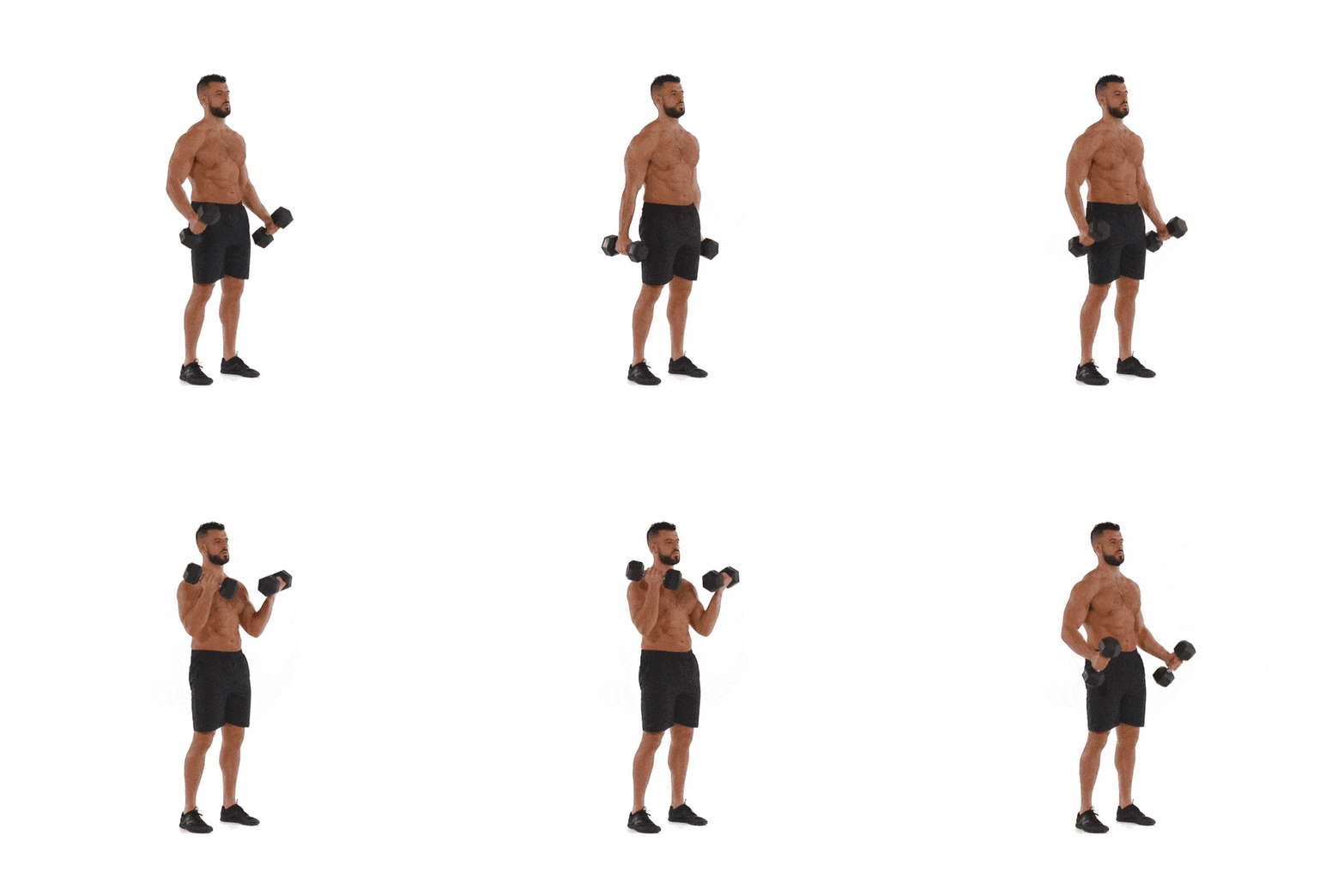
You might be able to use a heavier weight for bicep curls. Hold weights in front of your thighs with your palms facing out while standing with your feet hip-distance apart.
Support your abs and curve the elbows, twisting the loads towards the shoulders. Ensure your elbows don't approach yet remain at your middle. Gradually further down without losing pressure on the muscle, and rehash.
Muscles worked: Biceps and forearms
Standing with both feet shoulder width apart, legs twisted slightly. Hold light to medium dumbbells on top of your legs, palms facing the body, lift your shoulders.
Muscles worked: Shoulders, chest, biceps
Place your feet shoulder-width apart and bending your knees slightly. With your arms by your sides and your palms facing in, slacken your shoulders. Exhale, bend your elbows, and pull the weights in the direction of your shoulders. Take a breath and hold them there, then release the weights as you inhale.
Muscles worked: Biceps
Stand or place an adjustable bench at a 45 to 60 degree incline and lie against it with a dumbbell in each hand. Hold the weights with your palms up and your core engaged. Then keep your upper arms vertical and swing the weights up. Pause for a moment and slowly return the weights to the starting position with your arms fully extended.
Keep in mind to keep your elbows tucked at your sides, to crush the biceps at the beat of the lift, and to lower the weight until your arms are completely amplified.
With your arms straight down and your palms facing your sides, hold a dumbbell in each hand. Curl both weights simultaneously while maintaining your upper arms by your sides to reduce the amount of momentum needed for the curl.

By plunking down and leaning your back against a seat to perform slant free weight twists, you're guaranteeing insignificant undesirable enrollment from your shoulders. You'll likewise be staying away from force from your lower body. That implies that it'll be all biceps, constantly. Furthermore, that is precisely exact thing you need.
If you have difficulty fully lifting your arm with no pain in the elbow, these may be of particular help. This move can help you to develop your biceps without putting undue strain on your elbows by limiting the end range of motion while allowing for full extension.
To make sure that your biceps are doing all the work, focus on maintaining a stationary shoulder. Grasp the bench with your lower back.
Perform two to three sets of 12 to 15 reps.
From remaining with a free weight in one hand next to you, step the contrary foot once more into a rush. Lean chest somewhat forward and put free hand on thigh. Free weight ought to be in accordance with front knee. Draw in your back and shoulder as you drive elbow back towards roof, aligning free weight with chest. Get back to begin. Switch sides; rehash.
Muscles worked: Back, shoulders, triceps
The barbell bench press may get a lot of love from the bros, but the true testimony to upper body strength is the ability to crack out great quality pull ups or chins. Not only are they a no-cheating movement, but they develop one of the healthiest regions of the body to work that is the middle and upper back. This is the gold standard for a great V shape and developed upper arms, so don't let it leave your plan.
sets and reps. Pull-up skill often depends on a person's body type, so focus on setting a basic goal of 3 sets of 8 reps. If you're a powerlifter (meaning heavy weight), this may take a little work. If you're already comfortable doing it, try doing a few weighted rows using a weight belt and light external weights. Remember to focus on form first.
Exercises like pull-ups and chin-ups are excellent for building the size and strength of your lats, upper back, and biceps. Every variation has advantages of its own. For two reasons, though, the mix-grip pull-up is slightly superior.
Your body rotates when you hold something unevenly, and resisting that rotation uses more core muscles. Put simply, it's a superior form of core exercise. Second, an underhand grip is more intense than a chin-up but less intense than a pull-up since you are stronger with it. Because of this, the mix-grip pull-up is an excellent intermediate variation for people looking to improve their pull-up technique.
Grab a puller with alternating grips - one palm facing you and the other facing forward. Engage your core and grip tightly to pull yourself up until your chest is level with the bar. Pause for a moment and slowly descend. Do all your reps in this position, then switch handles for the next set.
Use a resistance band to perform band-assisted pull-ups if need be.
Sets and Reps: Perform three to four sets to near failure.
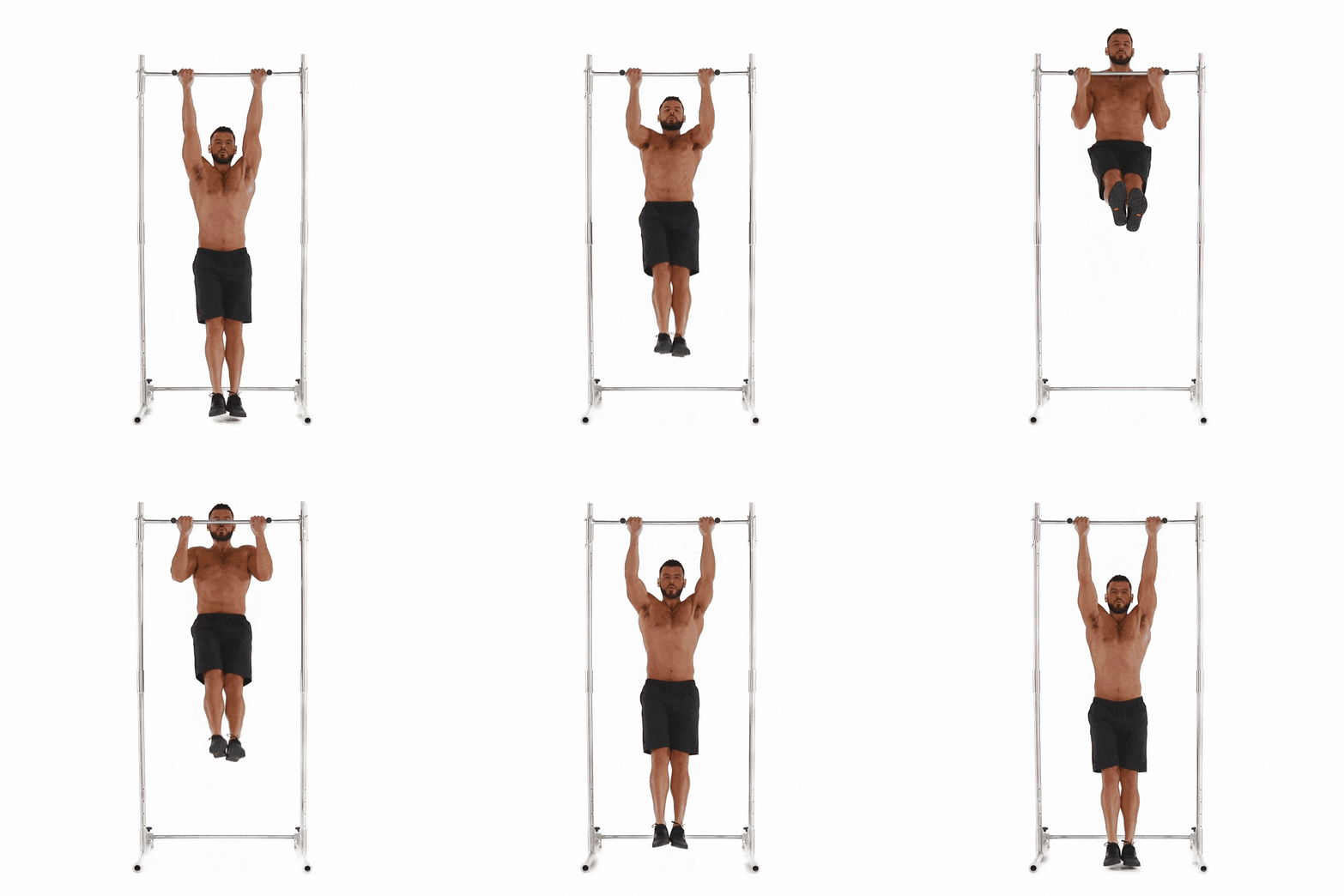
Get the bar at (or marginally interior) bear width, with a supinated hold (palms confronting you). Whereas keeping your center tight, drag yourself up until your chin is over the bar. Attempt not to utilize energy to urge your chin over the bar.
The standing barbell press is a fantastic exercise for developing your shoulders, traps, and overall strength. While the pressing muscles (deltoids, triceps, and traps) must produce a lot of force during the exercise, the stabilizing muscles (abs, low back, and glutes) must also produce a fair amount of force. The best part: Compared to exercises that call for the scapulae to be immobile and pinned down, this one promotes far better joint health by allowing for free mobility at the shoulder blade.
Set a free weight at shoulder level in a squat rack and put the hands on it right external shoulder width. Step out with the bar resting at collarbone level, and ensure the elbows are situated straightforwardly underneath the bar not behind it or before it. Stand tall, press the glutes, and fold the jawline. Press the load up in an orderly fashion (hold back nothing, you won't hit it) as you breathe out. When the bar clears your face, push the head and chest "through the window" you've quite recently made with your arms. The biceps ought to be close to the ears at the highest point of the lift as you lock the rep out. Bring down the bar gradually to the beginning position, respite, and rehash. As you do this, abstain from unnecessarily reclining; stay unbending and tall.
For strength gains (which is what this movement is most suitable for), keep reps on the lower end. Start with 4 to 5 sets of 3 to 6 reps, using weight that's challenging but allows good form.
Weighty conveys are an extraordinary method for building a greater and more strong chest area. This might appear to be irrational, yet stacked conveys are something other than a molding device and metabolic finisher for the finish of your exercise. They're likewise an extraordinary method for adding size to your chest area, especially in the arms and traps. There's likewise a reward benefit: The improvement of grasp strength, which is critical for usefulness beyond the exercise center. Assuming you need solid lower arms, this development is for you. It's likewise a quite extreme cardio challenge, so sets of stacked conveys will do ponders for your body molding, as well. Concerning which convey to attempt, we like the rancher's convey. It's one of the most helpful stacked conveys as it requires only a couple of free weights, iron weights (or truly anything weighty), and a space to walk.
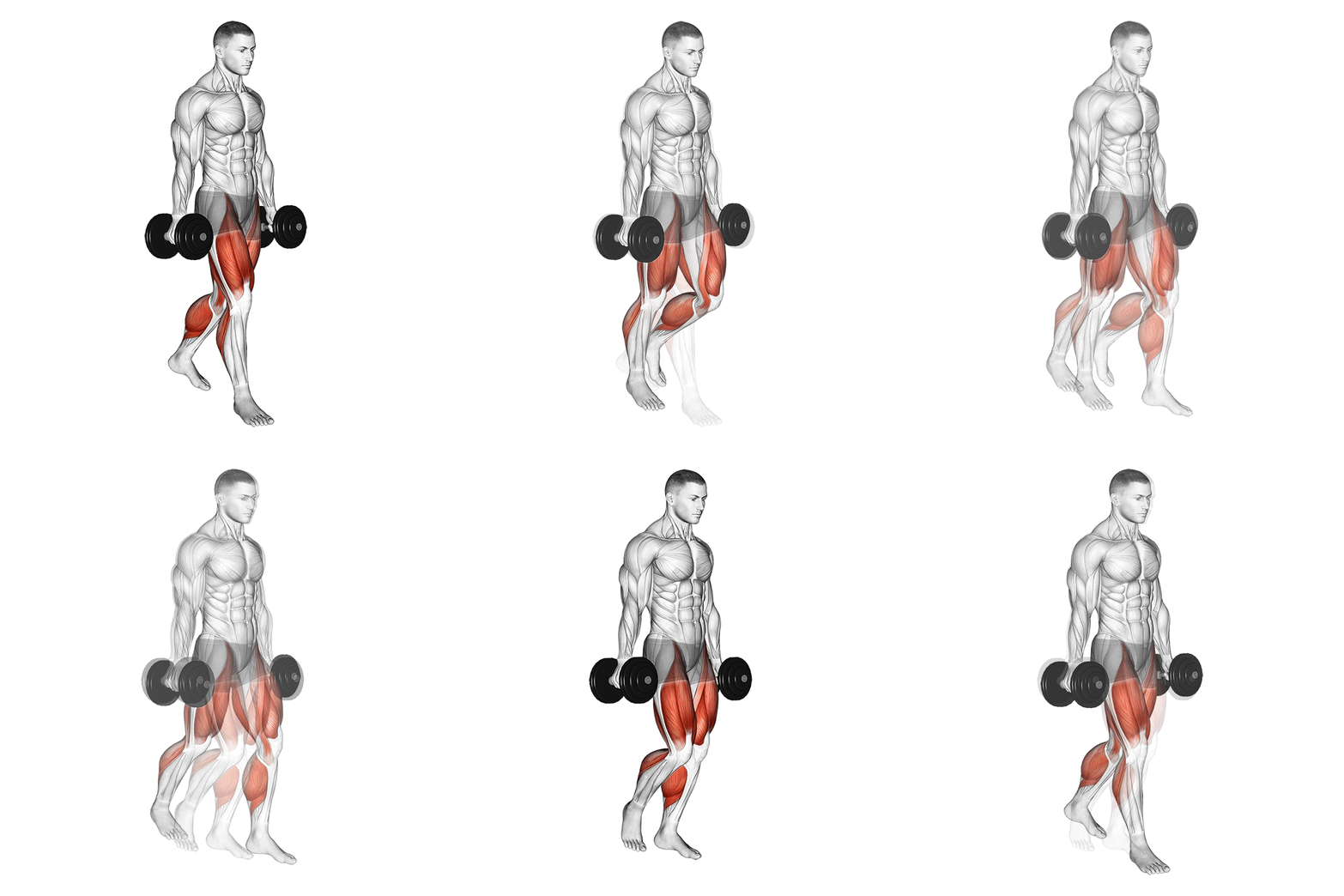
Just pick up the load with a trap bar or two heavy dumbbells or kettlebells, ideally even on both sides. Ensure that you use the proper form of deadlifting, maintain a stable spine and drive with your legs. Once you're standing, just take a short, deliberate step. Use good posture, keep your shoulders down and back, and let your chest lead the way.
Keep your shoulders back and down throughout the exercise to maintain back engagement.
Perform three to four sets to near failure.
Don't forget about your core, which is part of your upper body. The main event is hanging leg raises. Not only is this exercise a great way to tone your abs, but it's also great for building grip strength. Let's talk about win-win.
Make sure your legs are straight underneath you while you hang from any pull-up bar using a double overhand hold. Raise both legs straight up without swinging, bending the knees to a roughly 90-degree angle. You want your thighs to be as big as your chest. Your back rounds to do this are acceptable. Repeat after lowering your legs gradually and without swinging back to the starting position. Recall that your speed will determine how controlled you can execute the exercise and if you should use your abs the entire time or simply your hip flexors. The race is won by perseverance.
Aim for 3 to 4 sets of 8 to 10 good quality reps. Done well, this should be a burner.
If there's one total back mass builder worth adding to your portfolio, it's the bent-over row. When done correctly, the erector spinae is responsible for maintaining a strong isometric contraction while your upper back works dynamically, making this a movement that really burns the posterior chain and increases overall thickness.
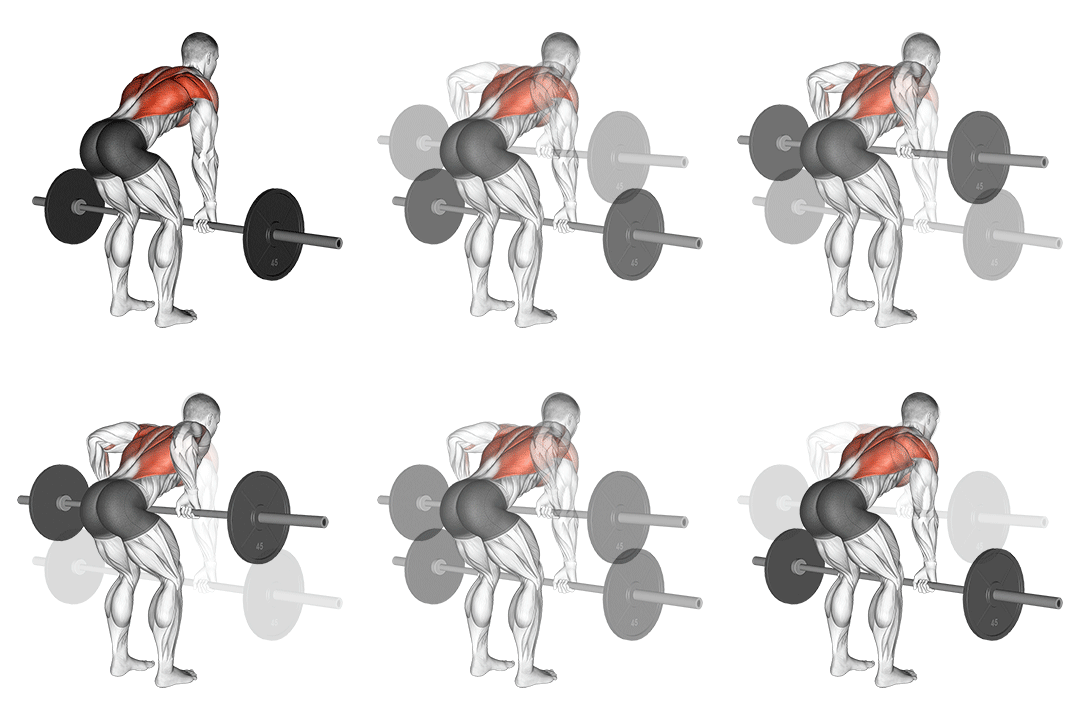
Begin with a shoulder-width grasp on a barbell whereas standing tall, and pivot your way descending until the bar hangs fair underneath knee level, in exceptionally near nearness to the shin. Be beyond any doubt to be careful of your moo back situating, so you're remaining impartial or gently curved (like you'd amid a deadlift). See at the ground 2 feet before the bar, and push the weight specifically upward (it ought to contact the upper abs). Lower the bar to full arm expansion and rehash. Keep in mind to crush the bear edges together on each rep.
Perform 4 to 5 sets of 8 to 12 reps.
In relation to core training, it's critical to remember that the core has multiple functions. While leg raises train the trunk flexion (as in a situp pattern), trunk extension is a useful way to train the core. In order to stabilize the spine during ab wheel rollouts, the trunk must be stiff. Lifters can achieve the best of both worlds by combining this with leg raises to create a six pack that is full of functionality as well as show.
For this, you'll require a stomach muscle wheel. Bow on a mat, and begin with the wheel situated exceptionally near the knees on the ground. Ensure your back is just about as round as conceivable here, in light of the fact that as you broaden your body, it'll level itself out normally. Gradually drive the wheel away from the knees forward, and permit the hips to push ahead with the haggle. Reach as far above as your abs will permit you, without feeling any tension in your lower back (on the off chance that you feel pressure, you've reached excessively far). Support hard, and pull the wheel back in to the beginning situation by switching the activity.
Focus on 3 to 4 sets of 6 to 10 reps, depending on your skill level.

Lie on a stage, seat, or floor and hold loads (around 5 to 8 pounds for ladies, 8 to 15 pounds for men; however pick a weight that is ideal for you). Hold the loads straight up over the chest with the palms looking in.
Brace your core to keep the body stable, and a slight bend in the elbows as you slowly lower the arms to the sides.
You stand or kneel, holding a resistance band in each hand. You should have your hands about 2 or 3 feet apart, although you may need to adjust your hand position to get more or less tension. The closer your hands are, the harder the exercise will be.
Start by keeping your arms straight and keeping your left arm still, press the right side of your back and open the strap by pulling your right elbow down to your chest. Return to the starting position and repeat. Do 15 repetitions on the right arm, then switch and do 15 on the left side.
Lie face-down on a tangle and put the hands on the floor another to the ears, elbows bowed. Lock in your abs and gradually lift the chest off the ground, centering on utilizing the lower back muscles.
If necessary, you can gently support yourself with your hands, but try to use your back muscles as much as you can. Reduce and carry out again.
Another choice is to put the hands behind the head, which is really difficult. Considerably seriously testing: Hold the arms straight out before you as you lift the chest off the ground.
In the lateral advanced exercise, you should be a little lighter. Stand with your feet about hip-width apart and hold dumbbells with your arms bent 90 degrees, palms facing in.
Keeping the 90-degree point, lift the arms straight to the sides, keeping the elbows in a settled position. Lift to bear level. At the beat of the movement, your arms ought to be parallel to the floor. Lower and rehash.
You can perform a triceps kickback exercise by putting your foot on the ground or platform and supporting your body with one hand while another is working.
If not, tip from the hips with a weight in your right hand until your torso is parallel to the floor or at a 45-degree angle, if possible. To support your lower back, place your left hand on your thigh.
Begin by bringing the right elbow up so that it's right close to your back. Keep the arm there as you broaden the right arm straight back, crushing the rear of the arm. Lower and rehash.
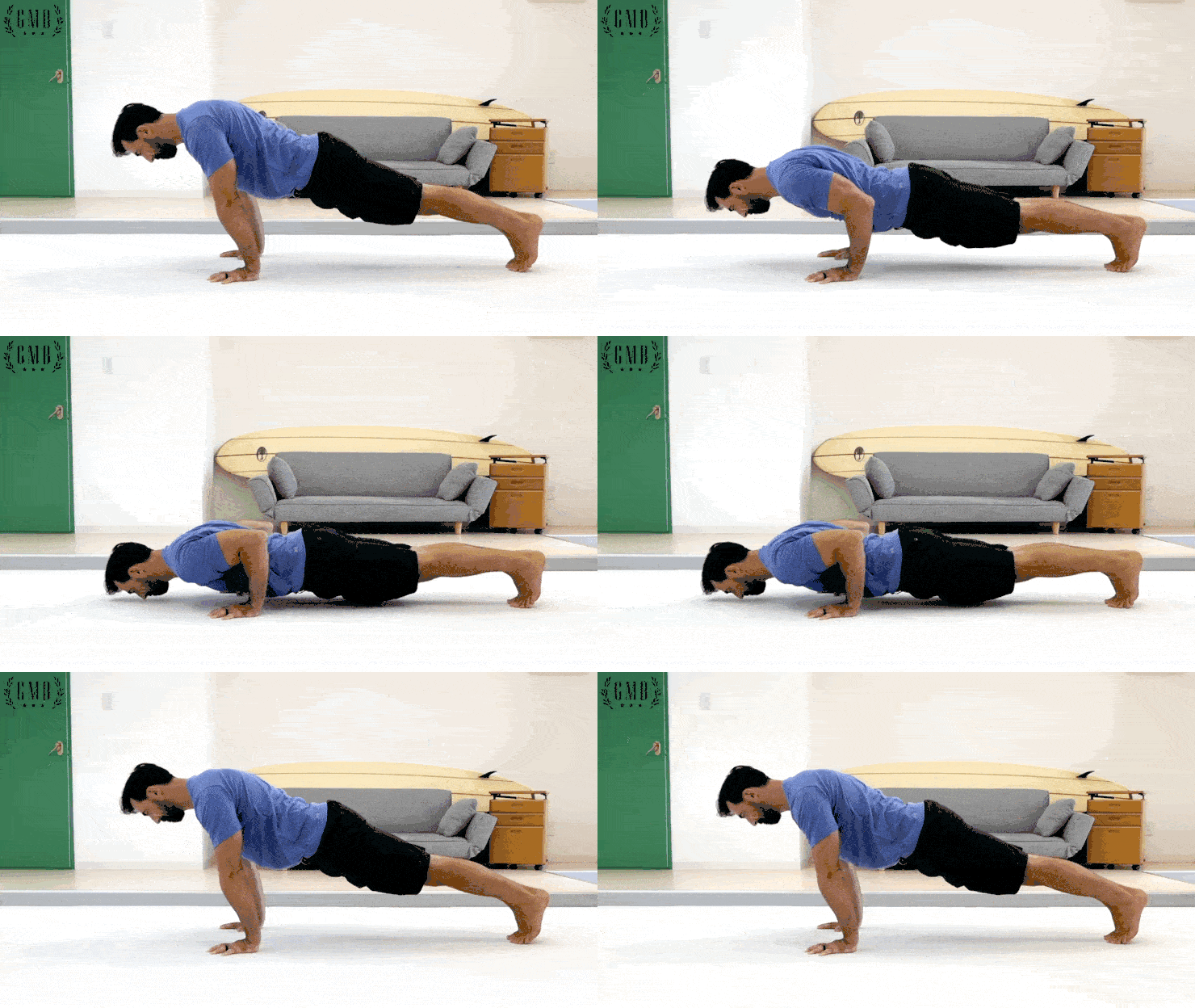
The push-up, ah. Even though this exercise is very basic, a lot of people find it challenging. Even though it looks easy, performing one correctly requires patience, practice, and advancement. Pushups have countless health advantages and are typically the game-changing exercise for the upper body that most men don't recognize (or acknowledge) they need in their regimen. They're the best exercise for calisthenics, and they're also excellent for strengthening the core and putting a serious strain on the chest and triceps. Furthermore, because they allow for greater scapular mobility than a bench press, they can support strong shoulders. When performed correctly and to the fullest extent of your range of motion, this compound exercise works your abs, triceps, shoulders, and chest muscles.
Start in a classic high plank position (on the hands and toes on the ground), and establish your starting posture. Your elbows should be locked out, and there should be a straight line from head to heel. Don't let your hips sag in, or your back overarch. Keeping the hands at shoulder width, descend slowly toward the floor, letting the elbows tuck themselves in toward your sides. Once the torso has made gentle contact with the floor, press upward as one unit. Breathe out as you press (blow yourself away from the floor) until you reach complete lockout.
Pushups may seem rudimentary to some, so it's worth the challenge when you can do about 15 consecutive reps with good form. The "ladder" is done as follows: Do 2 repetitions. Hold the top position after the last repetition and hold this plank for 10 seconds. Then do 3 push-ups. Hold the top position for 10 seconds, then do 5 repetitions. Hold again for 10 seconds, finish with 10 repetitions and rest completely. Aim for 4-5 sets of ladders and rest 2 minutes between sets. You need every second.
Starting on your hands and knees, walk your hands forward until your back is flat and your hands are shoulder-width apart.
Twist the elbows and lower into a push-up, going as moo as conceivable. It's Alright in case you'll as it were go a number of inches at first. Make beyond any doubt your head and neck adjust, and you aren't driving together with your chin.
If it's hard for you, walk your hands back and take some weight off your upper body. If floor pushups are difficult, you can also attempt a modified version like incline pushups or wall presses. Moving on to more difficult pushups can require strengthening of your upper body and core muscles.
A variation on the bench press would not be complete without it, and since you can isolate the muscles more easily with dumbbells than with a barbell, you will gain a lot more hypertrophy. Each pec is in charge of supporting the weight and holding its own. Moreover, a lifter may find it more comfortable to rotate their wrists with dumbbells than they would with a fixed bar that they must hold throughout the full range of motion.
While it may not feel as spectacular as stacking on the weight plates, the free weight seat press is a must while you're attempting to construct areas of strength for a, chest. The one sided nature of the lift implies that you'll be working the two sides of your body uniformly, an unquestionable requirement for competitors hoping to keep a decent constitution.
You can perform the dumbbell bench press on a flat bench, an incline, or a decline. All three variations should be rotated into your program for the most well rounded chest hypertrophy. This will give you multiple ways to target the muscle fibers in your chest and promote growth.
Start with the dumbbells on the thighs as you sit on the edge of the bench. "Kick" the dumbbells up to your starting position as you fall back. This may be a skill that takes a couple reps of practice, but it's worthwhile to master. Pull the shoulders back, and create some space between your low back and the bench. You'll make this easier if you pull the feet in close so the knees are bent inside 90 degrees.Press the weight away from you to a full lockout above the chest. Don't overreach; keep tight.Lower slowly to chest level and repeat.
This is a hypertrophy training tool, so focusing on 3 to 4 sets of 8 to 12 reps would be ideal for chest development.
Not only is the reverse row a great move to build your pecs, but you'll build a muscle-laden back and plenty of strength. This exercise doesn't get as much recognition as it should, largely because it's considered Pull-Up Lite and can benefit anyone from beginners to experienced lifters.
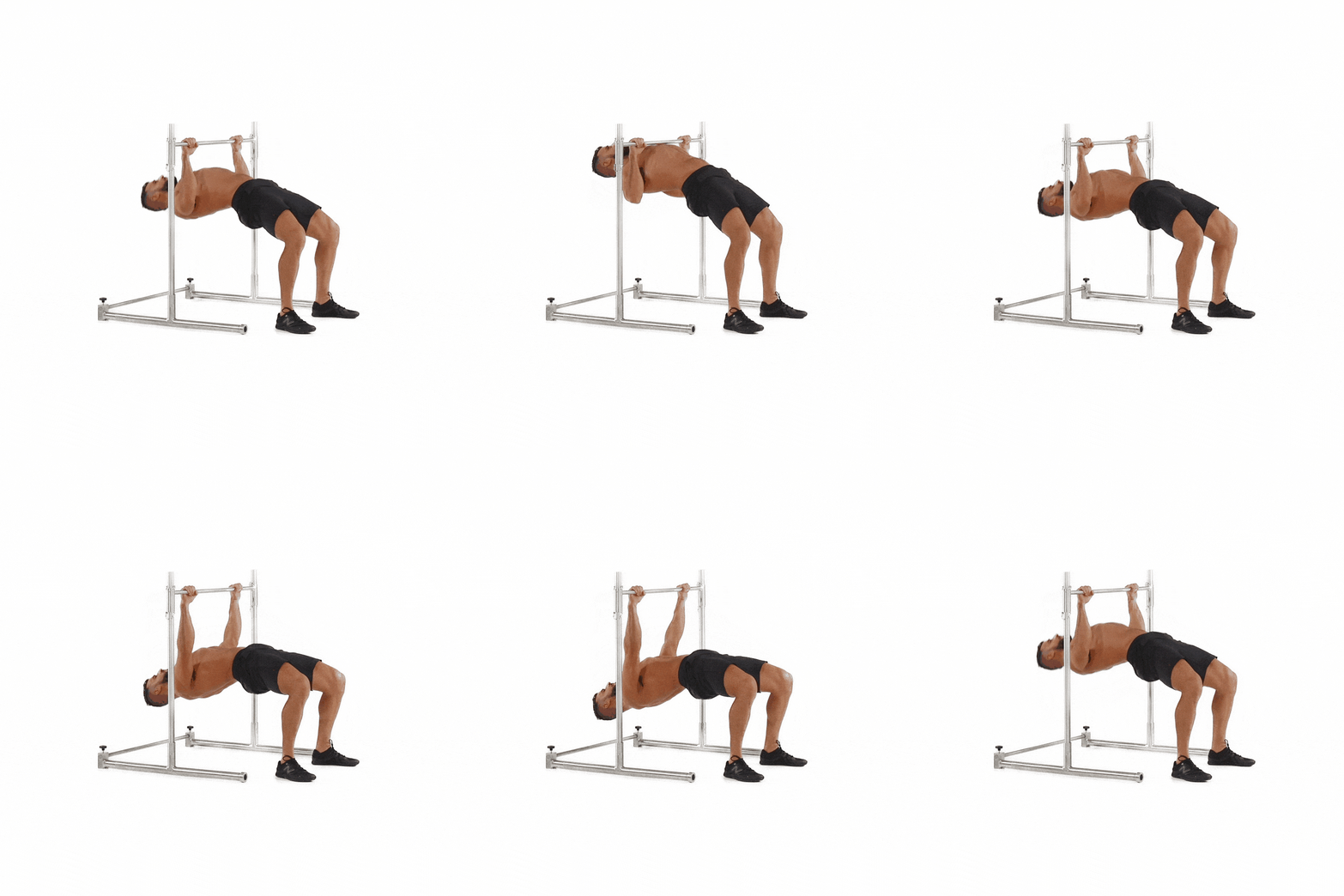
In spite of the fact that underrated, there are bounty of benefits to the rearranged push, it's scaleable, can be done nearly anyplace, and charges the back muscles without stacking the joints. Particularly in a poorly equipped exercise center, this push variety can demonstrate itself the foremost open and still benefit lifters of all ability levels. It's another upper back designer that moreover minds lifters who may have lower back issues or earlier wounds.
In the power rack, set the barbell at waist height. Hold the bar under your head and, with palms on opposite sides of your heads, grasp it a little farther away from your head. You extend your arms and legs, so you're in a straight line from head to heels. Keep this straight line and raise your body to the bar as quickly as you can so that your chest reaches it, gradually lowering into a starting position again.
This movement will be harder the more horizontal you are. In order to progress to a fully horizontal position, beginners should raise the bar and complete a little fewer horizontal rows.
Perform three to four sets to near failure.
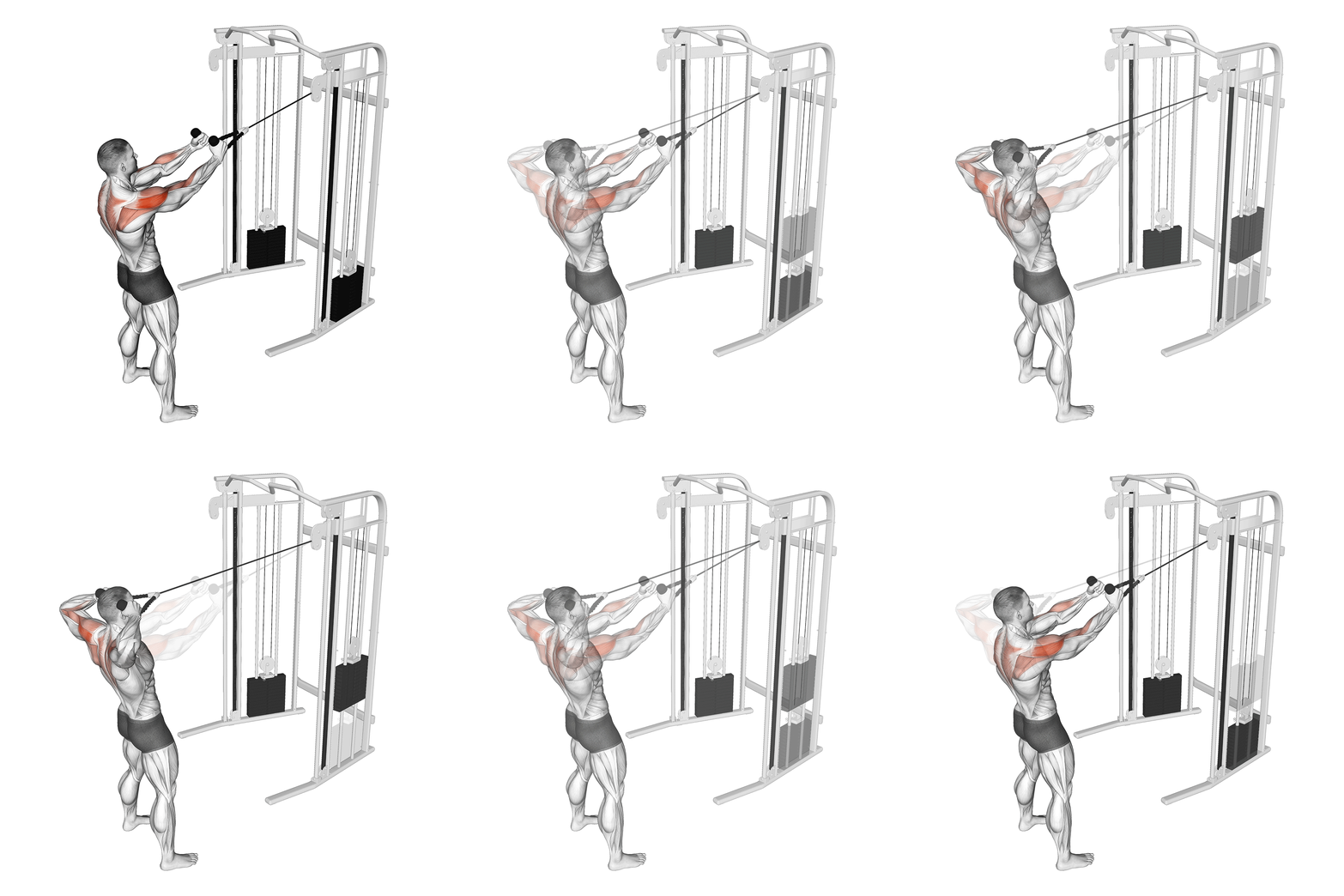
This development is one of the most incredible chest area "medication" developments you can do, and it very well may be performed with groups, links, or even free weights. You can't overtrain this development, and it's a unique advantage for shoulder wellbeing, pose rectification, and upper back improvement. Basically, you don't need this out of your arrangement.
Using a double-overhand grip, raise the pulley or resistance bands to the level of your forehead. To remove the weights from the stack, step back with the ropes while maintaining a high elbow and hand position. Squeeze back your shoulders and pull the ropes up to nose level while keeping your high elbows in line with the ropes and cable. Make sure to separate the hands and feel the contraction of your midback and rear deltoids. For every repetition, stop at the point of maximum contraction. You shouldn't try to lift the entire stack during this movement. Here, going lighter really works better than going heavy.
Start with 4 to 5 sets of 15 to 20 reps
The tension press, or overhead press, uses weight using the shoulders and arms without the help of the lower body. Since you're not using speed, you can't lift as much weight, but it's great for building strength.
You'll be able utilize dumbbells, kettlebells, or a barbell for the strict press. Lifting a barbell does require more bear portability, so in the event that that's something you're missing, begin with dumbbells.
At shoulder height, place a barbell on the rack. With your hands shoulder-width apart, grab the bar from underneath, letting it sit in your palms, and set it at the top of your chest. To create a strong base, tighten your core and push the chest forward. Use only the upper body to shift your head away from the bar, push it up in a straight line. At the top of the lift, lock your arms and slowly lower back to the starting position.
Warm up your rotator cuffs extensively before performing this lift.
Do three to four sets of four to eight reps.
The push press works the same muscles as the strict press,the shoulders, chest, and triceps but it uses force and momentum to move the weight. In order to push the barbell overhead, perform a lower-body dip (imagine a quarter squat with knees over toes).
The energy from the plunge allows you drive more to weight over your head contrasted with a standard above press, and more burden implies more strong pressure for more muscle. Since you'll likewise foster a ton of force from the push press, you can see CrossFit competitors carrying out this into their exercise to help different activities, like grabs and jerks.
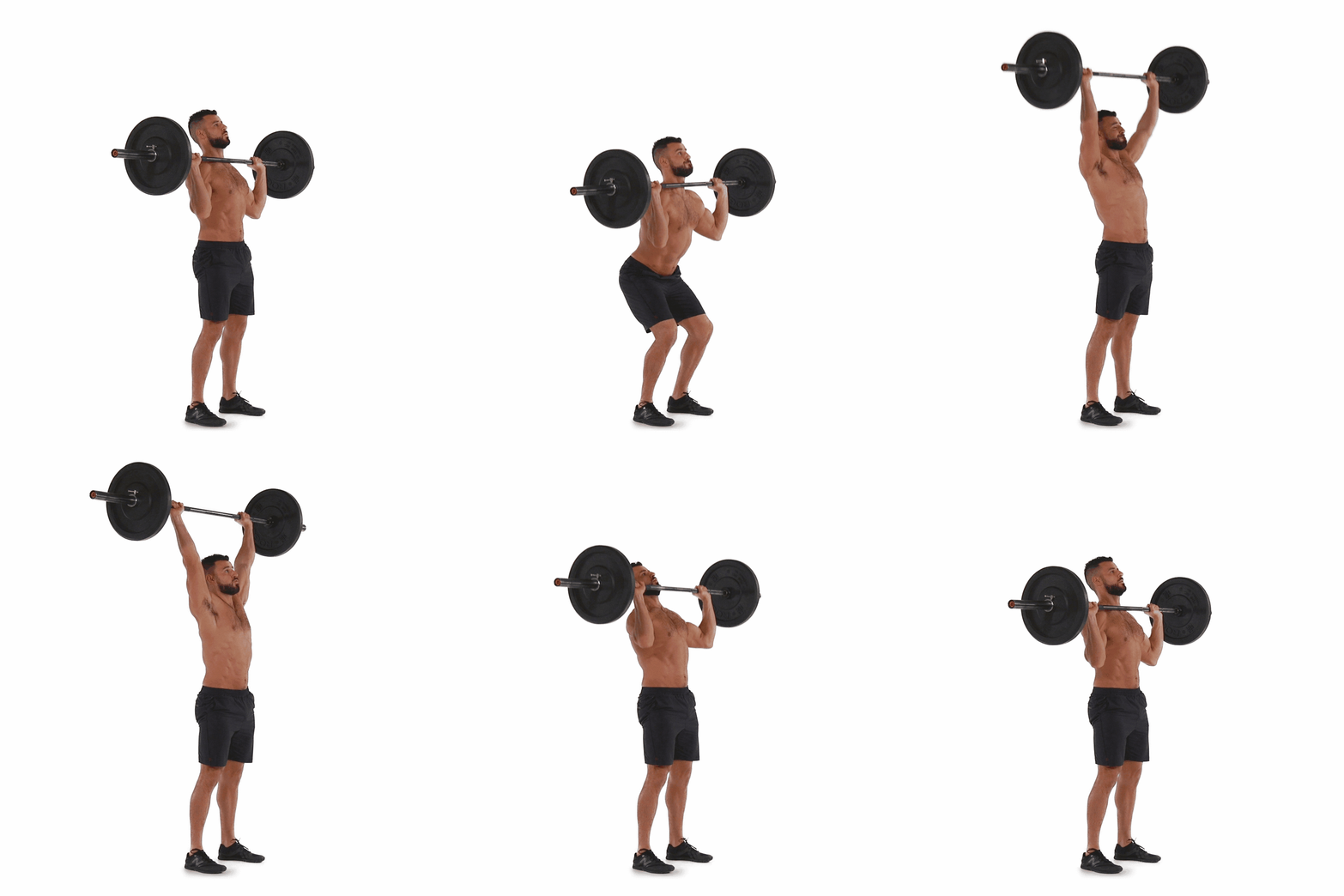
Assume the same front rack position as you would for a front squat or jerk to begin, and align your shoulders and wrists with a shoulder-width grip. Drive your knees over your toes while dipping a few inches downward with an upright torso. Next, thrust your chest and torso through the barbell. Drive yourself up with your legs until the barbell locks out above your head. Reduce gradually and repeat.
Make sure you're keeping your core engaged as you transfer force from your lower body to your upper body. The more efficiently your core can transmit force, the better your lift will be.
Perform two to four sets of four to eight reps
In addition to the aesthetics created by this exercise, the bench press and all its variations (incline, decline, close grip, dumbbell and floor press) are movements that target the chest, triceps and shoulders. This is one of the best movements for building horizontal press strength.
Like most barbell works out, it permits you to utilize a more noteworthy stack than you'll marshal with kettlebells or dumbbells. Powerlifters ought to prepare the seat press routinely since it's one of the three competition lifts nearby the squat and deadlift.
Lie flat on your back on a bench and get your eyes directly underneath the barbell. With your hands wider than shoulderwidth apart, grip the bar with your hands. Get your feet closer to your glutes, push your legs back, and lift the bar over your chest. When you're breathing and pushing your feet back, lower the bar a little bit to your chest. Press the barbell up until you're locked out, Arch your back slightly.
Try out various grip widths until you determine which one best suits the length of your limbs. Be sure to continue using your lats to stabilize the lift.
Perform three to four sets of four to 10 reps.
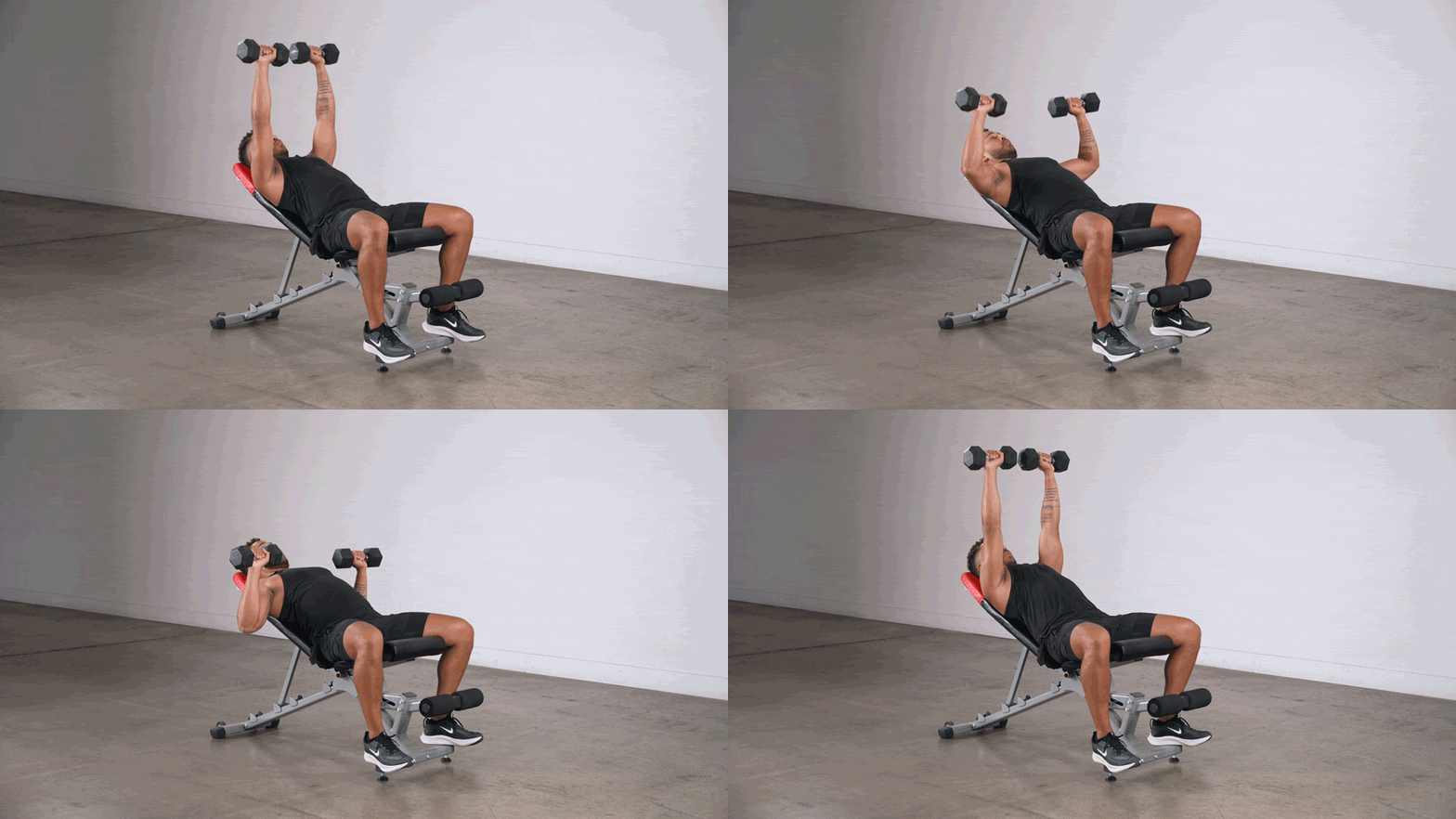
Set a movable seat to a 30-to 45-degree point and lie back on it with a free weight in each hand at shoulder level. Then, at that point, curve your back and drive your feet into the floor.
Press the weights over your chest
A common exercise in bodybuilding and weightlifting, the bent-over row helps to build muscle in the lats and upper back. As compared to other rowing variations, it enables you to use the maximum amount of weight. Regularly lifting greater weights with proper form results in increased muscle mass.
Because you're in a hinged position at the pelvis, the bent-over row works the lower back isometrically. A stronger lower back helps strengthen and maintain a rigid body in deadlifts and squats.
Put a stacked barbell on the floor and stand together with your feet marginally more than hip-width separated. Pivot down to the barbell and get the barbell with a shoulder-width hold. At that point, bring the barbell up to knee level with the back straight and middle bowed at 45 degrees. Drag the barbell between your navel and sternum. Delay, at that point gradually lower the barbell back down and rehash.
You are lifting a lot of weight if you think it is necessary to adjust your back position in order to gain some momentum for starting the workout. Lower the weight.
Perform three to four sets of six to 10 reps.
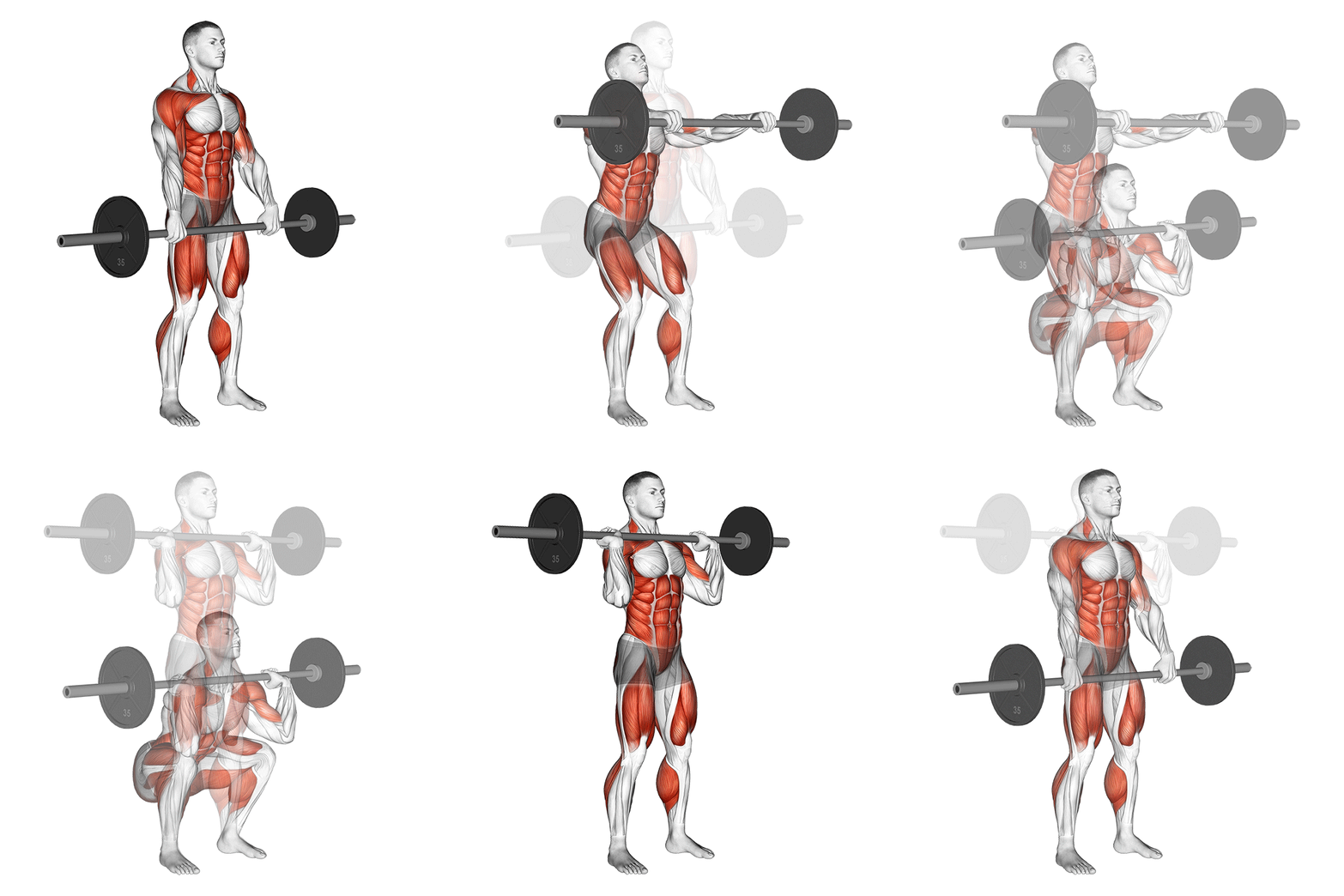
Because you're in a hinged position at the pelvis, the bent-over row works the lower back isometrically. A stronger lower back helps strengthen and maintain a rigid body in deadlifts and squats.
For experienced weightlifters and good starting points for athletes of all levels, the hang clean may be useful. Check out the hang clean if you want a boost in athletic performance, explosive movements such as sprinting or jumping.
Stack a barbell with an suitable sum of weight for your wellness level or utilize an purge bar. Your hands ought to be marginally more extensive than shoulder-width separated on the barbell, and it ought to be within the "hang" position meaning your hips are pushed back, weight is in your heels, and the barbell is sitting at your mid-thigh. Keeping your spine unbiased and your lats flexed, expand your hips whereas shrugging your shoulders to drag the bar and drop yourself underneath it. With the weight in your heels and hips pushed down, capture the bar in your palms on your shoulders and turn your elbows up, so they are indicating before you.
Warm up your wrists before starting a workout that is clean and focused. You will be able to cycle the barbell much more skillfully as a result.
Do three to four sets of six to 15 reps, depending on your goals.
Weighted plunges permit you to at the same time work your chest and rear arm muscles relying upon the situating of your body. Contrasted with most rear arm muscles works out, the scope of movement you accomplish doing plunges is longer, so it's by and large viewed as one of the most incredible rear arm muscles works out.
It's okay if you can't perform weighted dips just yet. Until you gain strength and endurance, use your body weight. When you're ready, use a dipping belt to gradually increase the weight.
Either utilize a weight belt, or weighted vest, or hold a dumbbell between the legs for resistance. Press the bars with each hand and lower yourself down until your elbows break 90 degrees. Still crushing the bars, drive yourself upwards whereas keeping up a slight forward incline. When drawing nearer lockout, flex the back of your triceps, stop for a moment, and gradually lower down and rehash.
To target your chest more specifically, lean your torso forward.
Do three to four sets to near failure.
In the event that you're hoping to further develop strength and versatility, all you want is a seat and a hand weight for the hand weight sweatshirt. This exercise focuses on your chest, rear arm muscles, and not at all like the hand weight chest press the lats.
There are many advantages to it, even though it might not be as well-liked as the chest press, so you might want to reconsider your training regimen.
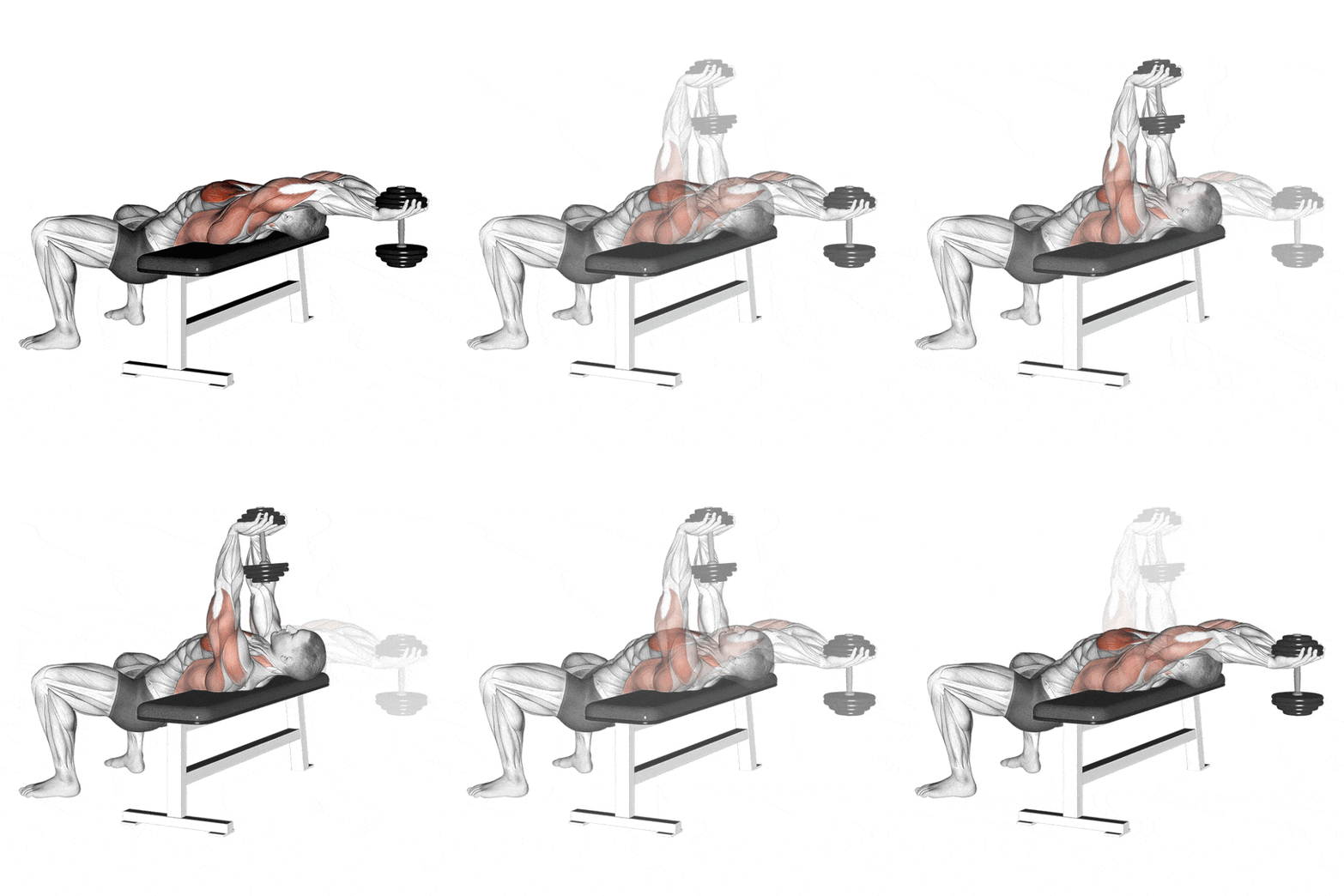
Begin by lying face-up on a seat along with your expanded over your chest and a dumbbell put in a precious stone grasp (make a jewel together with your and put the foot of the weight plate in between). With a slight twist in your elbows, gradually lower your arms until you're feeling a extend in your chest and lats. Reach as distant back as your bear versatility permits. Lock in your lats to drag the weight back to the beginning position.
Make sure you have a very stable grip on the dumbbell during this movement. You may not want to do it when your grip is extremely exhausted, for safety reasons.
Perform two to four sets of eight to 15 reps.
If you want to target the largest muscle in your back, the lats, try the deadlift. This exercise allows for heavier weights and more repetitions because the machine tends to stabilize the body.
Battling with pull-ups? The lat pulldown could be a profitable venturing stone since it copies a comparative development as a pull-up and permits you to include resistance to extend the concentrated.
If you have access to one, sit on the bench facing the lat pulldown machine, or stretch your legs over the pad. Pull your shoulders away from your ears, use your back to pull the bar out of your upper chest. If necessary, a slight lean back will do. To your starting position, slowly extend your arms.
Vary your grip using different handles or grip widths of the lat pulldown bar to alter the exercise angle.
Do three to four sets of eight to 15 reps.
Although this may seem like an odd choice, bear with us: The bear crawl puts a lot of strain on your chest, triceps, and shoulders. It involves crawling with your hands and feet beneath your hips and shoulders.
Try not to hope to pack creeps onto your muscles, however it's an incredible method for showing your body security. Likewise, its static sibling, the bear board, is a one of a kind position you can push from for a back and center one-two punch.

With your knees beneath your hips and your hands directly beneath your shoulders, begin in the tabletop position. As you raise your knees off the floor, your body weight should be balanced on your hands and toes. Step your right and left feet forward, then your left and right foot forward, maintaining a straight back and a tight core as you do so, just like you would in a plank. Continue in this manner for as long as you are able.
Try to keep your knees as close to the ground as possible. This will engage all your muscles even more.
Perform three to four sets of 30 to 45-second crawls.
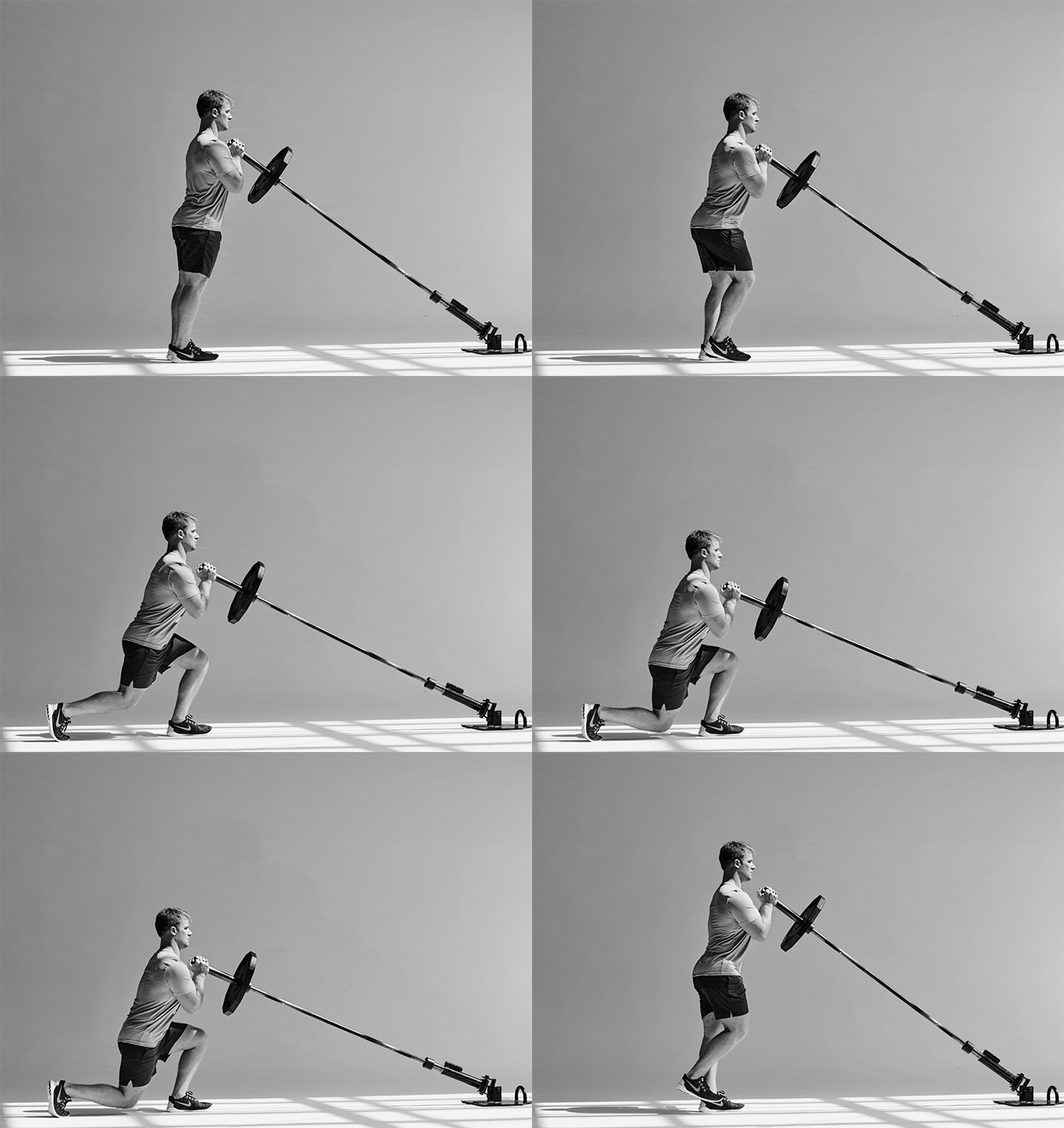 Place a barbell in a landmine base or, in the absence of one, in a wall corner. If you're doing the exercise with just one arm, take hold of the barbell at the top and hold it against your pressing side. Grip the barbell and hold it in the center of your chest if you're doing the exercise with both hands. Straightforward pressing of the barbell is required to fully extend your arm or arms. Return the bar to your starting position slowly.
Adjust your foot position as needed until you find the proper angle where you feel your entire shoulder girdle engaging.
Do three to four sets of eight to 15 reps.
Place a barbell in a landmine base or, in the absence of one, in a wall corner. If you're doing the exercise with just one arm, take hold of the barbell at the top and hold it against your pressing side. Grip the barbell and hold it in the center of your chest if you're doing the exercise with both hands. Straightforward pressing of the barbell is required to fully extend your arm or arms. Return the bar to your starting position slowly.
Adjust your foot position as needed until you find the proper angle where you feel your entire shoulder girdle engaging.
Do three to four sets of eight to 15 reps.
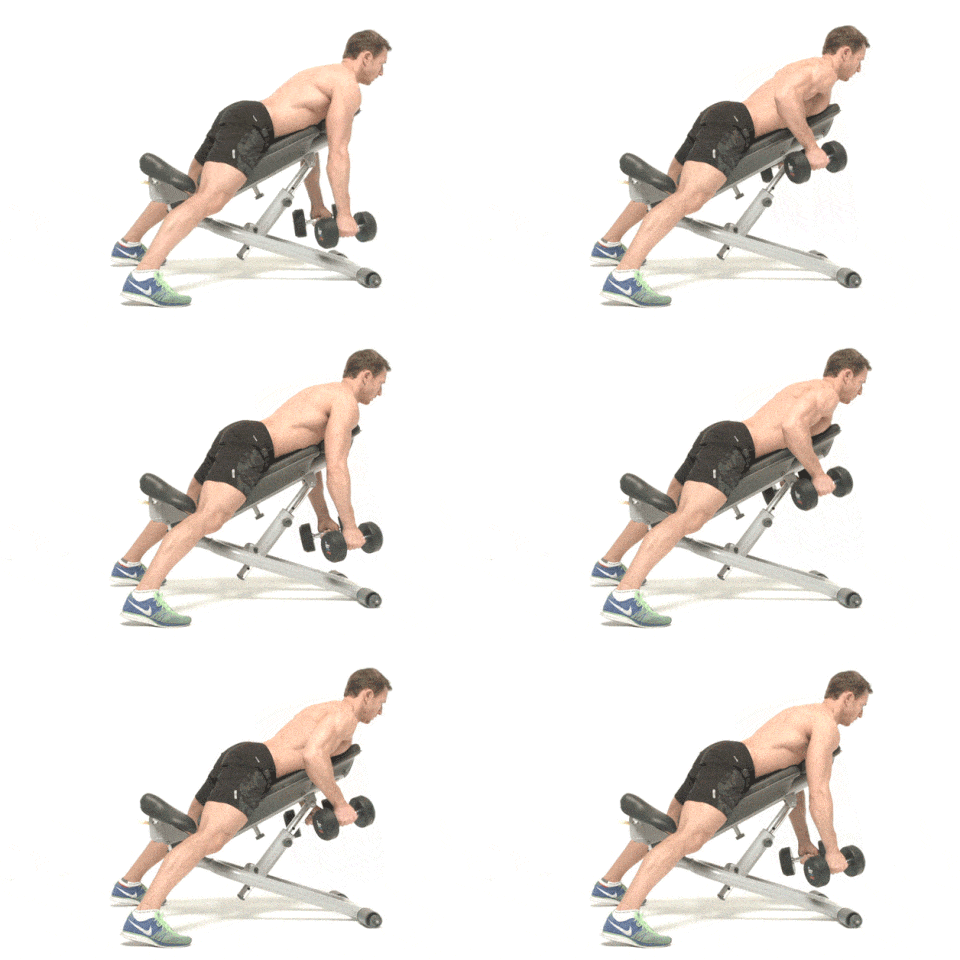 Hold a heavy dumbbell in each hand. Lie on your back on an incline bench. Allow the weight to pull your shoulders toward the ground. Press shoulder blades, row weights. Pull your elbows to your pockets. Press briefly from above and below.
There's no need to yank the weights to the biggest possible range of motion. You can stop when your arms reach a 90 degree angle.
Perform two to four sets of eight to 12 reps.
Hold a heavy dumbbell in each hand. Lie on your back on an incline bench. Allow the weight to pull your shoulders toward the ground. Press shoulder blades, row weights. Pull your elbows to your pockets. Press briefly from above and below.
There's no need to yank the weights to the biggest possible range of motion. You can stop when your arms reach a 90 degree angle.
Perform two to four sets of eight to 12 reps.
Do two sets of one "rep" (which is comprised of 21 reps).
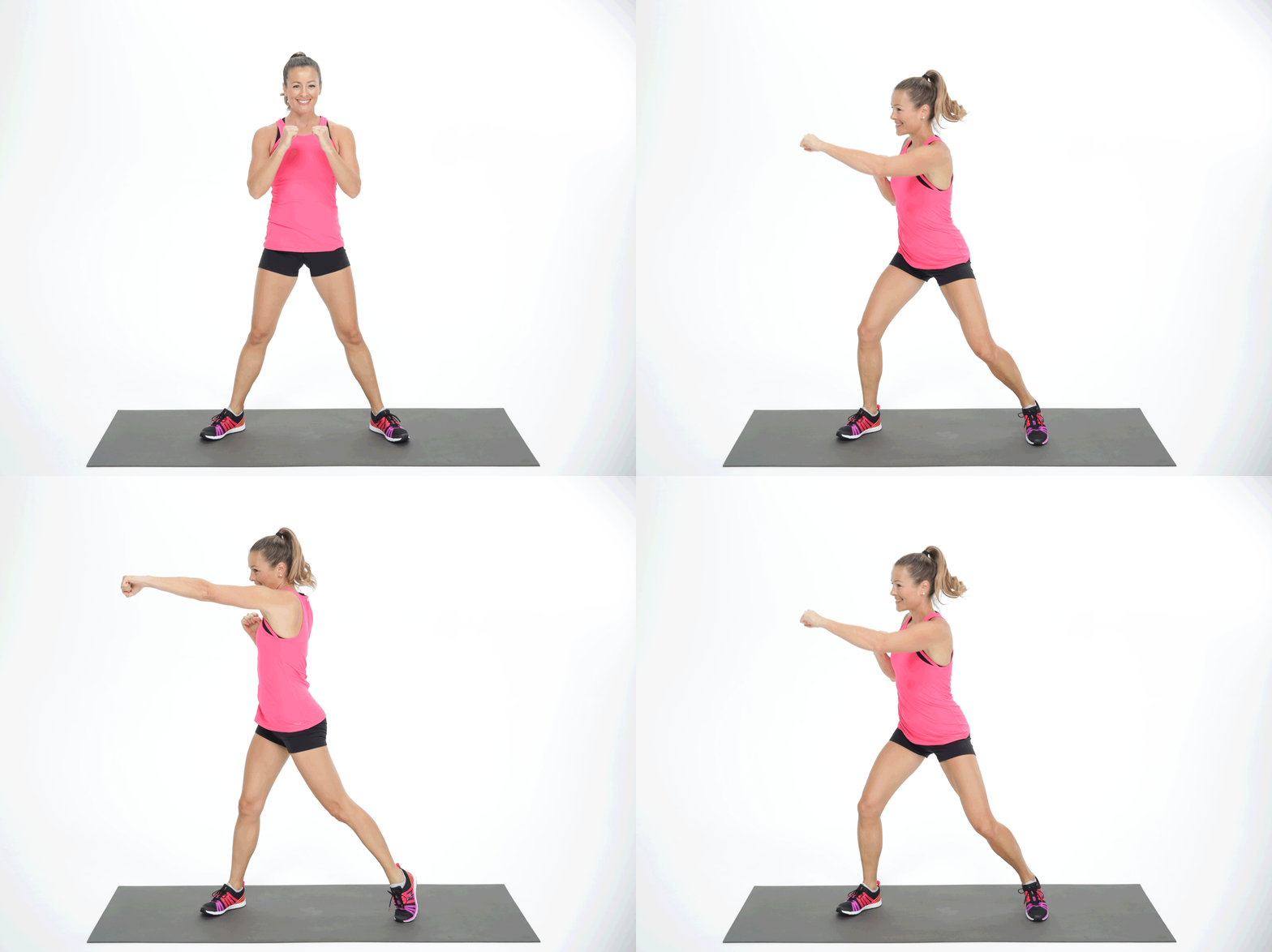
It is good for Shoulders, chest and triceps strengthening and Cardiovascular fitness.
How to do this: stand one foot in front of the other, bringing both hands into a fist just below your neck. To create a straight line from your shoulder to your hand, extend and punch one arm out at a time. Return the hand to the guard position, and alternate punches maintain a consistent pace.
How to advance: To generate more force, lift onto the balls of your back foot and punch with greater speed and force. To increase resistance, grab two dumbbells or lightly weighted objects..
How to regress: Slow the speed, power and range of movement of each punchWhat it's good for: Shoulders, lateral and anterior deltoid.
How to do it: Stand tall with your feet about hip-width apart, roll your shoulders back, engage your core and look straight ahead. Keeping your arms almost completely straight, raise them straight forward to shoulder height before bringing them back down. After that, raise both arms to the side at shoulder level and point down again. Alternate between both movements.
How to advance: Snatch two dumbbells or weight objects and perform the works out with the included resistance. Moderate the return stage of the development down.
How to regress: Perform exercise in a seated position.How to do this: Stand with your feet hip down, hold a plate in each hand. Rotate the plate around your head in a clockwise direction, then in a counterclockwise direction. When you rotate the weight, look forward and avoid bending your neck in order to compensate. Perform two overhead presses in order to complete 1 rep after 2 rotations.
What it's good for: Chest, shoulders, triceps and abdominal strengthening.
How to do it: Bring yourself down on all fours together with your amplified and shoulders straightforwardly over your hands. While on your toes and keeping your hips in line with the shoulders and feet, lower your chest down towards the floor by bowing the elbows. Some time recently coming to the floor, expand the elbows and thrust your body back up to the beginning position. Steps to follow: Put your feet on an elevated surface. g. Take a step or sit on the couch and do the exercise in a descending motion. How to regress: Place your knees on the floor and focus on completing the exercise in the same manner whilst lowering your hips down and keeping them in line with the shoulders and knees at all times.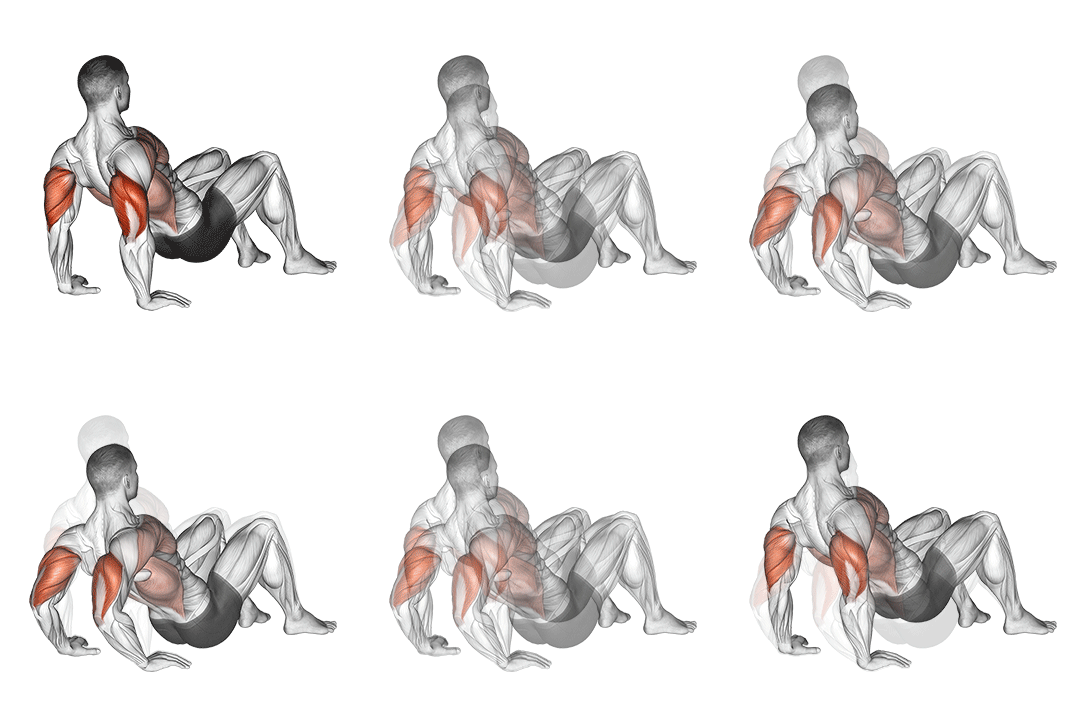
What it's good for: Triceps, chest and shoulder strength.
How to do it: Place your feet on the floor in a seated position and bring them to your hips, knees bent. Place both palms on the floor behind your hips, elbows bent. From here, press your hips off the floor, straightening your elbows before lowering.
How to advance: Perform the work out while raising one leg straight up within the discuss or put hands on the edge of a step, situate or couch and perform a full tricep plunge.
How to regress: Sit down and pause between each repetition.
What it's good for: Strengthen muscles of anterior and posterior chain.
How to carry it out: Place your feet about hip-distance apart and stand tall. With your hands on the floor in front of your feet, stoop forward from the hips. Breathe in and bring each hand forward one at a time. As your body forms a straight line from your heels to your head, let your heels come off the ground. Complete one press-up while in the extended plank position, then reverse the motion to go back to the starting position.
How to progress: Increase the number of press ups for each repetition. How to regress: Remove the press up element of the exercise.What it's good for: Shoulders, triceps, glutes, lower back, core.
The most effective method to make it happen: Start in a board position with your weight laying on your lower arms and your body in a totally straight line from shoulders to lower legs. Fix your abs and without allowing your hips to move, push up on to your hands each in turn. Keep on shifting back and forth between the board and broadened board positions.
How to progress: Add a press up every time you come up into an extended plank position.
How to regress: Perform the exercise sequence on your knees ensuring your hips stay in line with your shoulders.Stand with feet shoulder-width apart and hold a barbell, palms down, just in front of shins. Hold the hips back and down, keeping your chest lifted. When core engages, push through the heels to pull bar quickly up onto your chest at collarbone, keeping it close to you body, shrugging shoulders and elbows pointing forward as far as possible. As soon as bar reaches chest, push through heels again and press directly overhead, straightening arms and legs. Go back to the starting position.
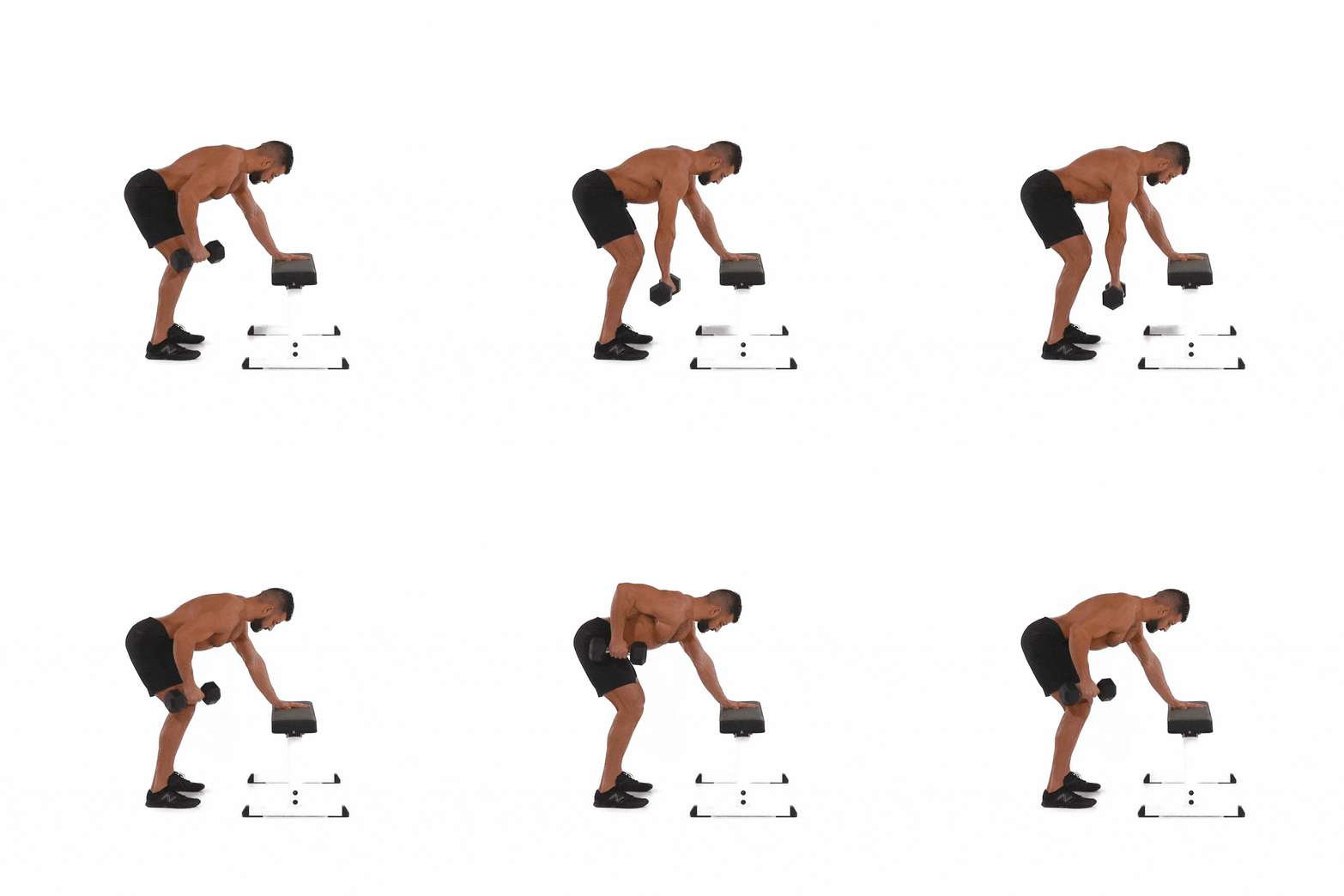
How to do it: Take one dumbbell in each hand and place one foot forward while standing in a staggered stance. Reduce your torso until it is nearly parallel to the floor by bending at the hips and knees. Drop the dumbbell from your shoulder so that it hangs at arm's length. Pull the dumbbell to your side while keeping your elbow close to your side, without shifting your torso. Squeeze at the peak of the movement and pause. Dumbbell lowered back to starting position.
How to do it: Stand with feet hip-width separated and twist your hips back. Hold the bar fair exterior of your knees. Keeping a level back, amplify your hips to stand up. Drag the bar up along your body until lock-out, as your hips drive through and your shoulders move back. Whereas pulling, keep your eyes on the ground many feet before you. Carefully lower the bar back to the beginning position.
How to do it: Hold an EZ bar (palms facing up) with a shoulder-width grip and arms extended with a slight bend at the elbows. Keeping your upper arms at your sides, curl the bar up. Take three seconds to lower the bar back down.
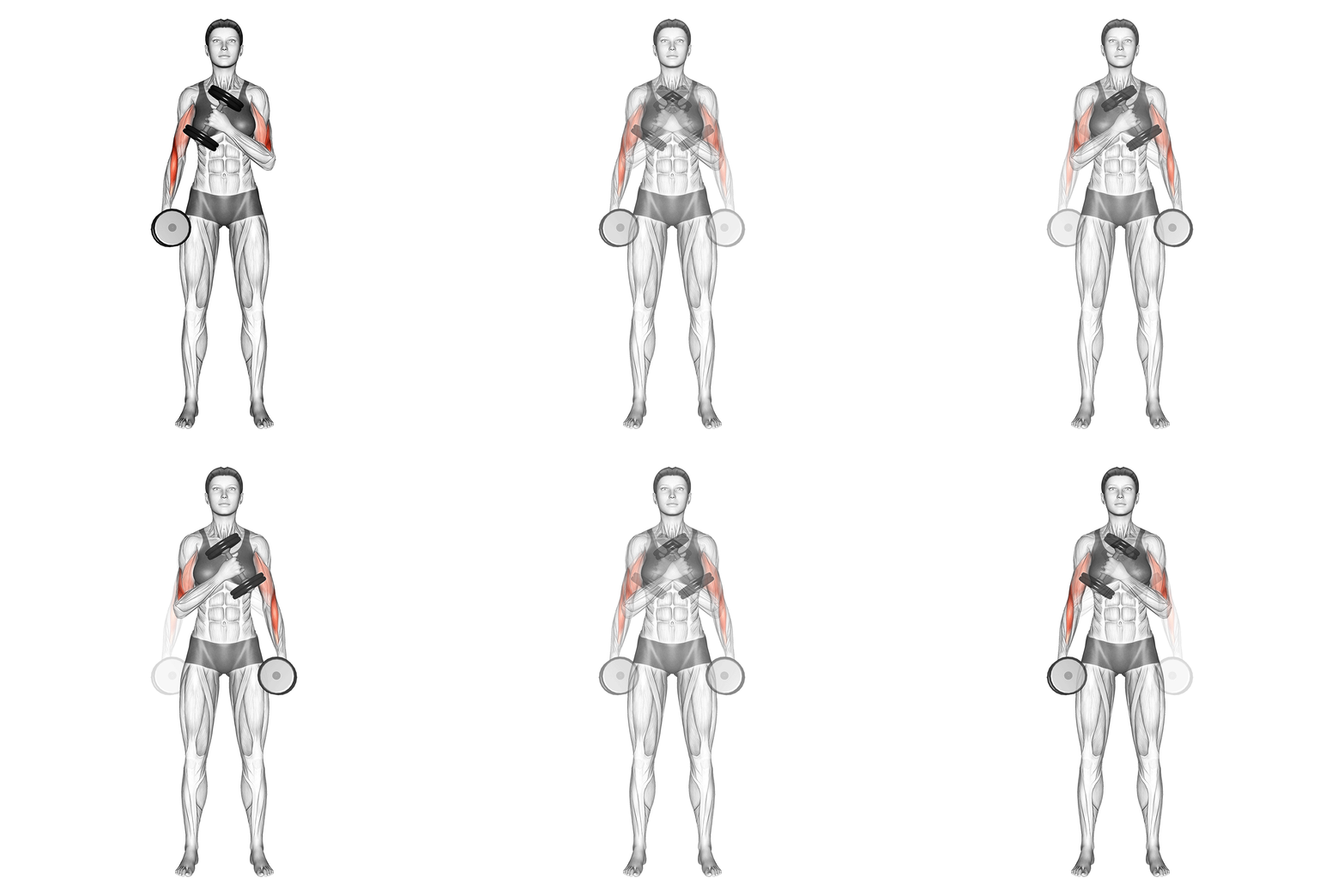
How to do it: Hold a dumbbell in each hand with arms hanging at your sides and palms confronting the body. With an upright pose, gradually start to twist one dumbbell up over your body to the inverse bear. Delay for one moment and gradually lower back to the beginning position. Keep in mind to keep your palms confronting internal, elbows tight at your sides, and to press the bicep at the best position.
How to carry it out: Hold one end of the rope in each hand and fasten it to the top pulley of a cable station. In order to feel a stretch in your triceps, push the weight down to lock out your elbows and then let them drift back slightly as you raise.
The most effective method to make it happen: Lying on a seat, hold the loads straight over your face. Keeping your upper arms at that point, twist your elbows and lower the loads behind your head. Broaden your elbows, keeping similar point with your upper arms.
How to do it: Step on the free end of each band with the opposite foot so the bands form an X in front of your body. When your upper arms are parallel to the floor, raise your hands 90 degrees to the sides.
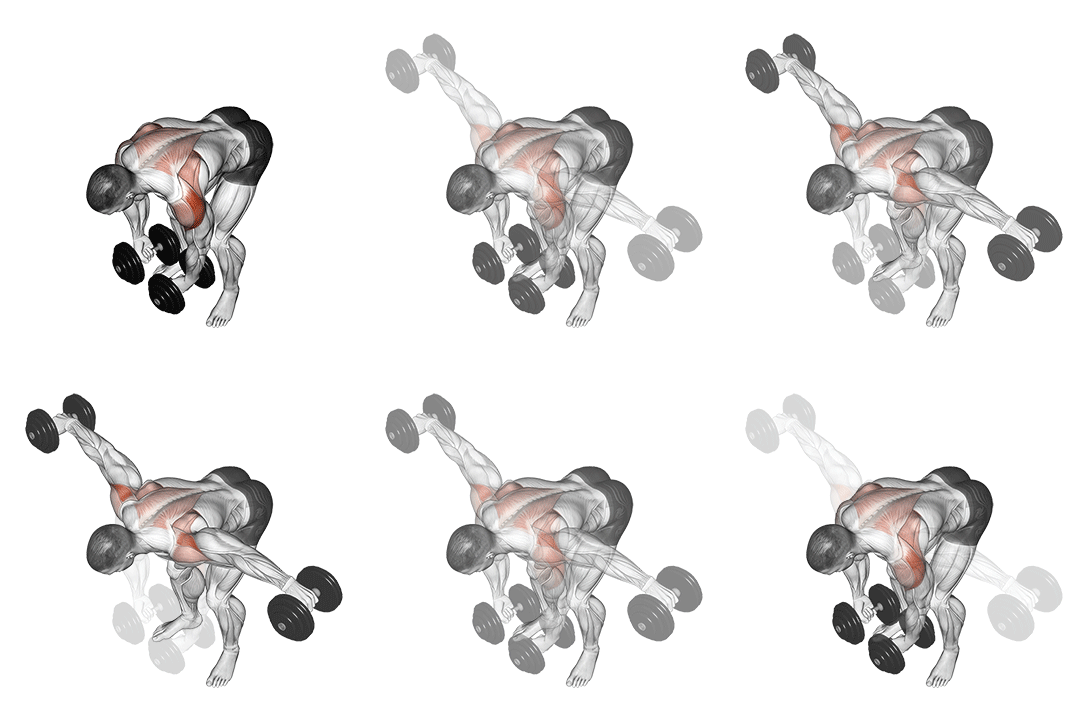
How to do it: Maintain the natural arch of your lower back while holding a dumbbell in each hand. Once your torso is roughly parallel to the floor, bend your hips back. Let your arms dangle. Now, extend your arms 90 degrees with your thumbs pointing upward until your upper arms are parallel to the floor while squeezing your shoulder blades together.
How to do it: Sit on a seat with slant and your frontal body confronting the situate. At that point amplify and raise your arms within the shape of a "Y" formation (thumbs upward) for the primary position. At that point bring them down to create a "T" (thumbs down). Take after with the final development by putting your arms within the shape of a "W" by shrugging and crushing your bear edges together and raising your arms like a field objective.
How to do it: Hold the dumbbells at your sides and stand with your feet shoulder-width apart. Bend your hips back into a squat until the weights are at knee level. Now explode up and shrug hard from the top. Reset your legs before starting the next repetition.
How to do it: Lie faceup on a seat, getting a handle on a barbell along with your file fingers on the interior edge of the knurling (the unpleasant portion of the bar). Curve your back and drag the bar off the rack. Lower it to your sternum, tucking your elbows around 45 degrees from your sides. When the bar touches your body, drive your feet difficult into the floor and press the bar directly over you.
Note:You'll be able do this with dumbbells as well.
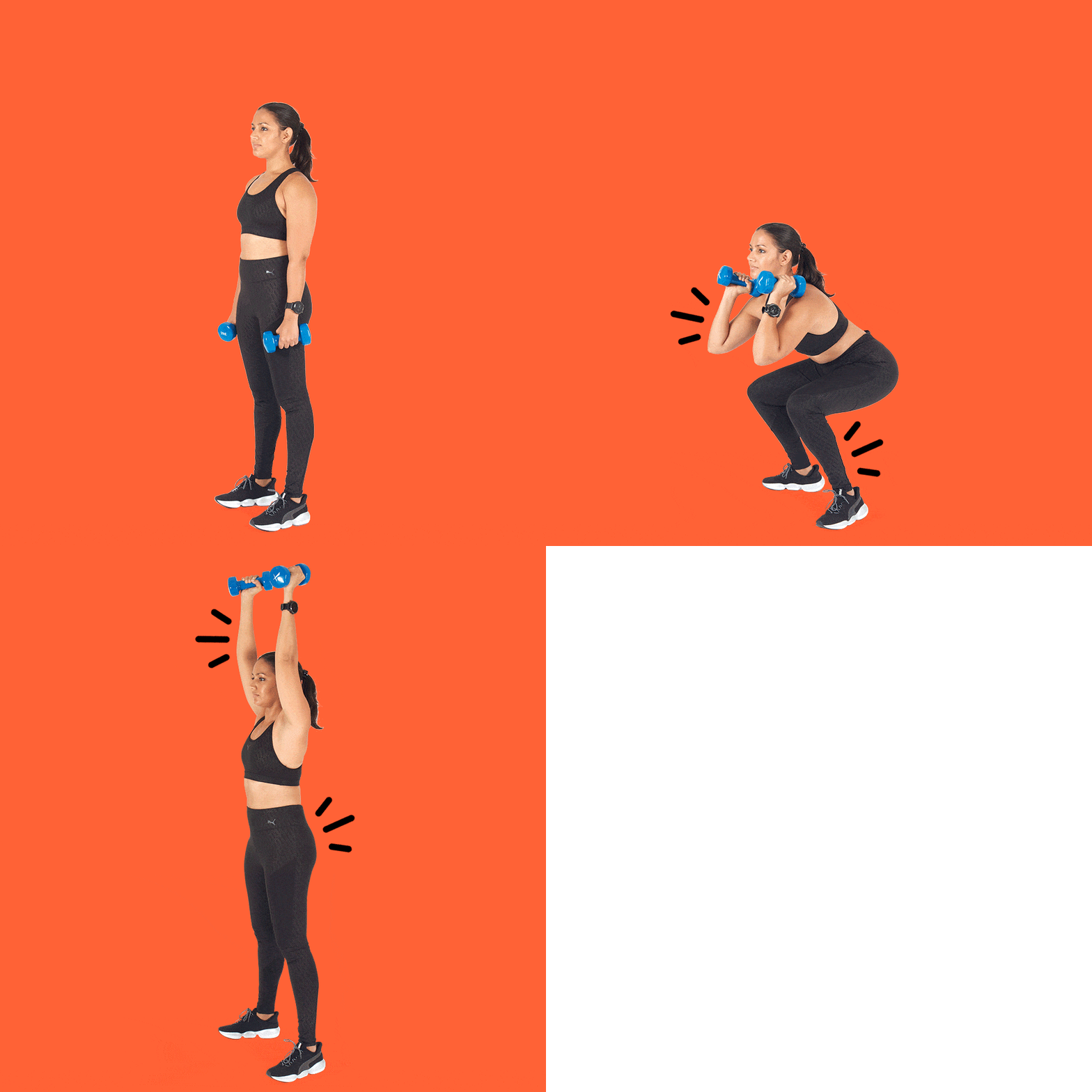
How to do it: Place your feet shoulder-width apart, then hold a dumbbell in each hand, palms facing each other, just above your shoulders. As soon as your thighs are parallel to the floor, drop into a squat. Forcefully return to the starting position by pushing the dumbbells overhead and extending them through your hips.
The most effective method to make it happen: Falsehood faceup on a level seat or strength ball, holding a free weight or portable weight in one hand over your chest. Holding back squeezed against surface, gradually broaden arm above until bicep is in accordance with ears. Get back to beginning position. For a more prominent test, perform free weight sweatshirts with raised legs: Falsehood faceup on a level seat, holding a free weight in two hands over your chest. Holding back squeezed against seat, draw in center and fix and raise legs over seat. Gradually expand arms above until biceps are in accordance with ears. Get back to beginning position.
How to do it: stand with your feet hip down, hold a plate in each hand. Rotate the plate around your head in a clockwise direction, then in a counterclockwise direction. Look forward while rotating weight and try not to bend your neck to compensate. Do two overhead presses after 2 rotations to complete a single rep.
You can make upper body strength training a regular component of your workouts by adding these exercises into your program. It is crucial to keep in mind that you can begin modestly. Starting with just one or two of these upper body exercises in addition to your regular regimen is highly recommended. Never forget to pay attention to and obey your body's signals.
Your comments must adhere to Terms and Conditions

Let us stay in touch. Join our newsletter so that we reach out to you with our best news and offers
Terms and Conditions






© Courteousnest. All Rights Reserved. Design by HTML Codex
